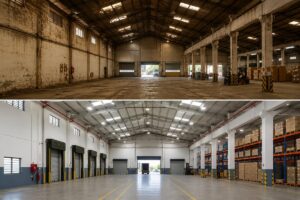
India’s monsoon can test every part of a warehouse operation. A sound roof may keep direct rain out, but it cannot prevent water from entering through loading bays, blocked drains, wet pallets or poorly covered vehicles.
The India Meteorological Department’s 2026 outlook also shows why businesses must prepare for local variation. Although seasonal rainfall across India was forecast below normal, some regions may still receive normal or above-normal rainfall. Localised heavy rain can disrupt a warehouse even during a weaker monsoon season. IMD’s 2026 monsoon outlook makes location-level planning essential.
Effective warehouse monsoon preparedness in India therefore requires more than repairing the roof. Warehouse teams must inspect yards, docks, drainage systems, inventory locations and emergency procedures before peak rainfall arrives.
Where Warehouses Fail in Heavy Rain
The most visible weak points are roof leaks, damaged wall joints and gaps around doors or windows. However, rainwater often enters through less obvious routes.
Blocked roof gutters can push water back into the building. Poorly sealed cable openings may allow water to travel along walls. Uneven floors can create pools near inventory, while damaged dock shelters may expose goods during unloading.
Storage practices can make a small leak much more expensive. Cartons placed directly on the floor may absorb water before employees notice the problem. Pallets positioned against external walls face higher exposure to dampness and seepage. Stretch film may protect against dust, but it does not always protect goods from prolonged contact with water.
Condensation also deserves attention. High humidity can damage paper packaging, labels, metal components, textiles, electronics and pharmaceutical products without creating a visible puddle.
Warehouse heads should treat stains, peeling paint, damp smells and swollen cartons as warning signs. Like a small crack in a windscreen, a minor water mark can point to a larger weakness.
The Monsoon Yard and Dock Checklist
A warehouse can remain dry inside and still face serious disruption outside. Waterlogged yards slow vehicles, damage packaging and increase the risk of slips, collisions and cargo contamination.
Before heavy rain, teams should clear drains, inspect covers and remove waste from water-flow paths. They should also check whether the yard slopes towards the drains rather than towards the warehouse. Potholes require quick repair because they collect water and make forklift and truck movement unsafe.
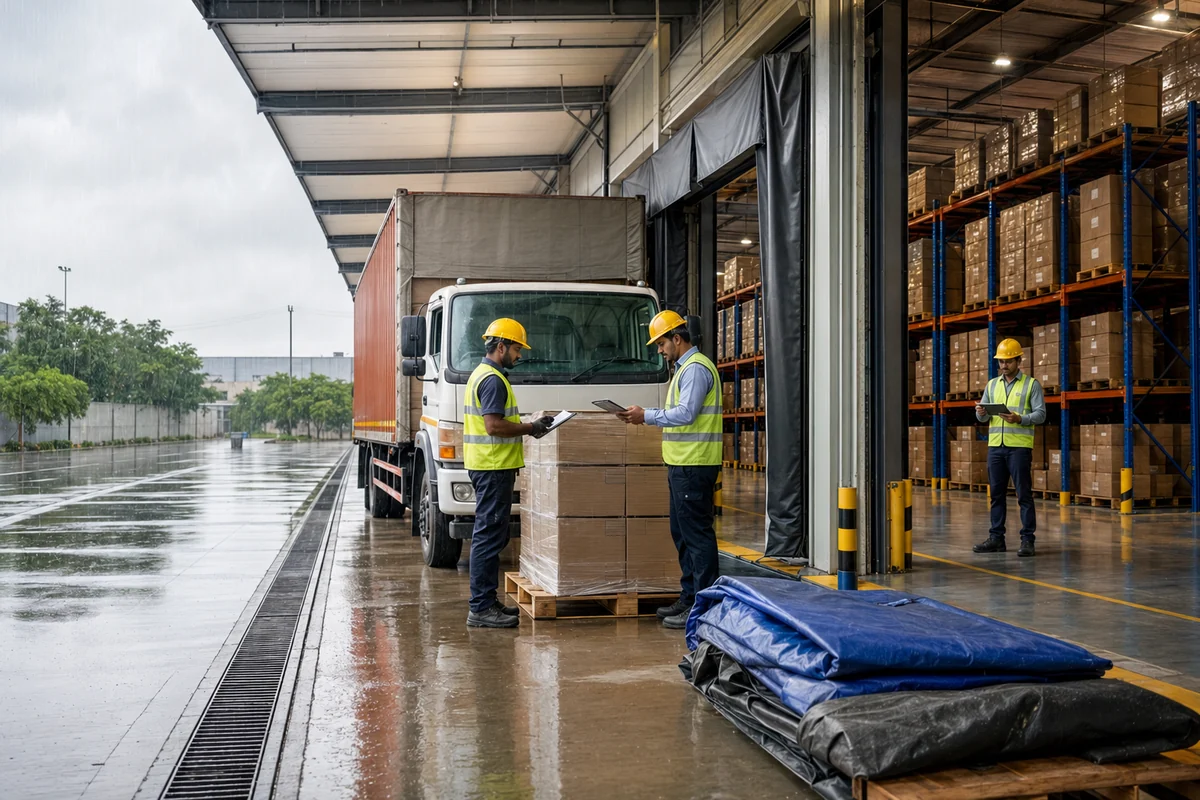
Loading docks need clearly assigned rain procedures. Dock shelters, rubber seals and canopies should cover the gap between the vehicle and building. Teams should keep waterproof sheets close to receiving areas instead of searching for them after rain begins.
Receiving teams should:
- Inspect the vehicle roof and cargo area for leaks
- Photograph wet, torn or crushed packaging before unloading
- Separate affected consignments from saleable inventory
- Record the condition on the delivery document
- Move accepted goods to a dry inspection zone
- Avoid leaving cargo exposed while documents are processed
Warehouse managers should also define when outdoor handling must stop. A short delay during intense rain may prevent a much larger inventory claim.
Protecting Inventory and Claims Performance
Water-sensitive products need protection based on their actual risk. Electronics, paper, chemicals, food ingredients and products packed in untreated cartons should not occupy floor-level or leak-prone locations.
Keep inventory on sound pallets or raised racks with enough clearance from floors and external walls. Use waterproof covers where suitable, but do not wrap products so tightly that trapped moisture causes condensation. Replace damaged pallets before they collapse or transfer moisture to cartons.
Product placement should reflect value as well as sensitivity. A high-value electronic shipment deserves a safer location than a low-value item packed in a water-resistant container.
Clear records protect both inventory and commercial relationships. Maintain photographs of inbound cargo, inspection notes, temperature or humidity records where required, and proof of corrective action. When a claim arises, this evidence helps establish whether damage occurred before receipt, during storage or while dispatching.
Emergency procedures should identify who can move stock, isolate electricity, contact maintenance and inform clients. Employees should know the safe evacuation route and must never enter standing water near electrical equipment.
What Occupiers Should Inspect Before Peak Rain
Businesses using leased or third-party warehouses should not depend only on a general assurance that the facility is “monsoon ready.” They should conduct a physical audit before the July and August peaks.
Inspect the roof, drainage outlets, dock seals, external walls, floor condition and emergency power arrangements. Ask for recent maintenance records and details of previous water-entry incidents. Check whether the facility has pumps, waterproof sheets, spill-control materials, emergency lighting and trained staff.
Occupiers should also review responsibility for damaged goods. The agreement must clearly explain insurance requirements, reporting timelines, claim documents and responsibility for building-related failures. A low storage rate can become expensive if the facility lacks basic protection.
Practical Monsoon-Readiness Checklist
Warehouse heads and B2B clients can use this final check:
- Clean roof gutters, yard drains and dock channels
- Repair leaks, wall gaps, broken seals and potholes
- Raise cartons and sensitive goods above floor level
- Keep stock away from external walls
- Test pumps, backup power and emergency lighting
- Store waterproof sheets near receiving and dispatch areas
- Train teams to inspect and photograph wet consignments
- Create a marked isolation zone for damaged cargo
- Review insurance cover and claim-reporting procedures
- Monitor IMD warnings for each warehouse location
- Record daily drainage, roof and dock inspections
- Share escalation contacts with staff, clients and transport partners
Strong warehouse monsoon preparedness in India depends on routine discipline. When teams inspect early, document carefully and respond quickly, they protect inventory, employees, customer commitments and the continuity of the wider supply chain.