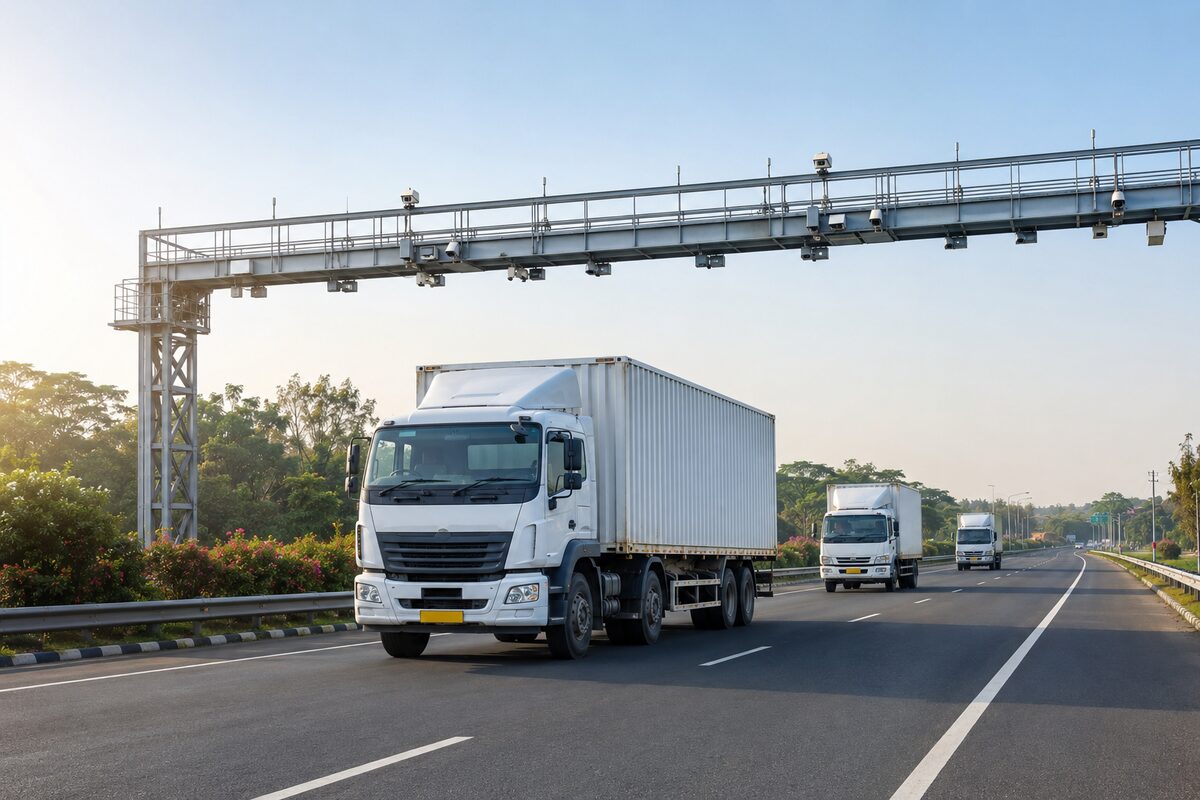
India’s highway tolling system is entering a new phase. FASTag is already used by around 98% of vehicles, making electronic payment the norm across the national highway network. In May 2026, India launched its first Multi-Lane Free Flow tolling system at the Chorayasi Toll Plaza on the Surat–Bharuch section of NH-48 in Gujarat.
Known as MLFF, the system uses FASTag and Automatic Number Plate Recognition, or ANPR, to collect tolls without requiring vehicles to stop. Around 41,500 vehicles crossed the location on its first day of operation. Similar systems have since been introduced at selected locations in Delhi and Rajasthan. The government plans to expand barrier-less tolling to more highway corridors.
For logistics companies, this shift is about more than saving a few minutes at a toll point. Barrierless tolling logistics India can produce valuable trip events that improve route planning, ETA accuracy, compliance and customer visibility.
What MLFF Means for Freight Operators
Traditional toll plazas interrupt the natural movement of a truck. A vehicle slows down, enters a queue, completes the toll transaction and then accelerates again. Even when FASTag works correctly, traffic volume or lane congestion can create unpredictable delays.
MLFF removes the physical barrier. Overhead equipment reads the vehicle’s FASTag and registration number while it continues moving. This can reduce toll-plaza dwell time, fuel consumption and stop-start driving.
Consider a truck travelling from Surat to Mumbai. If it loses 10 minutes at four toll plazas, its actual arrival may differ greatly from the original estimate. When those stops become free-flow movements, the trip becomes more predictable. Predictability matters because a warehouse can prepare the unloading bay, labour and equipment before the truck arrives.
However, logistics platforms must adjust their calculations. Historical route data may include delays caused by toll queues. As MLFF expands, platforms should separate old toll-plaza delays from current travel conditions instead of continuing to add outdated waiting time to every ETA.
From Toll Transaction to ETA Signal
A toll transaction is more than a payment record. It is also a reliable sign that a vehicle crossed a known location at a specific time.
A logistics platform can compare consecutive toll events to understand how a truck is progressing along its route. If a vehicle crosses one toll location at 2:00 pm and the next at 3:30 pm, the platform gains a useful picture of corridor speed. It can combine that information with GPS location, traffic conditions, planned halts and delivery schedules to produce a more confident ETA.
This works like checkpoints in a relay race. Each checkpoint confirms that the runner has completed another part of the course. Similarly, toll-linked events can confirm that a truck has passed a recognised point even when its GPS device temporarily loses network coverage.
Transport platforms can also use these signals to identify unusual route behaviour. If a truck misses an expected toll point, takes much longer than similar vehicles or appears at an unexpected location, the system can raise an exception. The operations team can then check for congestion, a diversion, a breakdown or an unauthorised route change.
Data Quality and Plate-Matching Issues
Better visibility depends on accurate data. ANPR cameras read registration plates, while FASTag readers identify the tag attached to the vehicle. The logistics platform must connect both records to the correct truck, trip and shipment.
Problems can arise when a number plate is dirty, damaged or difficult to read. A FASTag may be inactive, linked to an outdated vehicle record or placed incorrectly. A truck may also have changed ownership while older details remain in another system.
These are not minor administrative issues. A wrong match can assign a toll event to the wrong trip, create a false route exception or weaken the ETA.
Logistics companies should therefore maintain a verified vehicle record containing the registration number, FASTag status, vehicle class and ownership information. Their systems should flag mismatches instead of accepting every event automatically.
Compliance also becomes more important in a barrier-free system. Vehicles with insufficient FASTag balance or invalid tags may receive an electronic notice. If the operator does not pay the normal fee within 72 hours, authorities may charge twice the applicable amount. Continued non-payment can also lead to FASTag blacklisting and restrictions on certain VAHAN-related services, according to NHAI’s MLFF operating guidance.
Using Toll Data in Performance Reviews
Shippers can use toll-linked data to make carrier reviews more factual. Instead of discussing a late delivery only through calls and driver recollections, both sides can examine when the vehicle crossed key corridor points.
For example, toll events may show that the truck maintained normal line-haul speed but waited four hours at the destination gate. In another case, they may reveal a long halt between two toll points. This helps shippers distinguish road delays from loading, route or customer-site delays.
Useful performance measures could include:
- Average time between major toll points
- Variance between planned and actual corridor time
- Number of unexpected route deviations
- Frequency of FASTag or vehicle-identity exceptions
- Difference between predicted and actual arrival time
These measures can support fairer carrier discussions and more focused corrective action.
How to Prepare Logistics Tech Stacks for Wider Rollout
Logistics-tech teams should begin treating toll events as part of the trip timeline. They can build secure links between vehicle records, FASTag data, GPS feeds, shipment details and customer notifications.
Platforms should also create rules for missing toll events, plate mismatches, low FASTag balance, duplicate readings and unusual corridor times. A simple dashboard can show whether a trip is on schedule, delayed or awaiting verification.
Most importantly, teams should improve ETA models corridor by corridor. A route with MLFF will behave differently from one that still has conventional toll booths. The platform must learn that difference.
Barrier-less tolling will not solve every source of freight delay. Loading queues, weather, city traffic and driver rest periods will still affect delivery schedules. Yet it can remove an important point of uncertainty while creating a new source of verified movement data.
For PTC and other technology-led logistics providers, the opportunity is clear: turn each toll crossing into a useful operational signal and give customers an ETA they can trust.