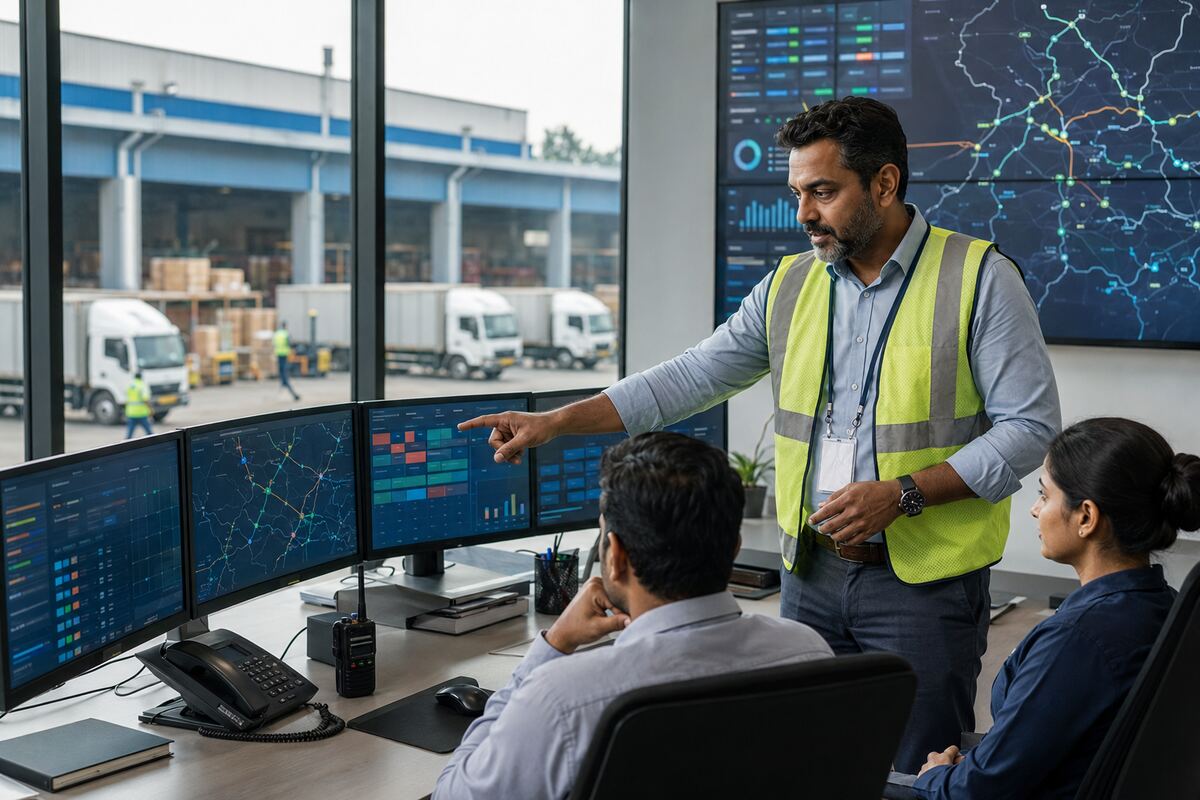
India’s logistics networks are becoming more connected, data-driven and customer-focused. A branch manager can no longer measure success only by the number of vehicles dispatched or shipments delivered from one location.
Modern logistics platforms provide information across branches, hubs, vehicles and customer locations. Government initiatives such as the Unified Logistics Interface Platform, or ULIP, also support better data exchange across the logistics ecosystem. These changes require managers who can understand the wider network and act before a local problem affects several deliveries.
This shift makes logistics manager training in India essential. Experienced branch managers already understand ground operations. The next step is to help them use that experience to manage information, exceptions, costs and customer expectations across a connected network.
The New Job of the Logistics Branch Manager
Traditional branch management focuses on local supervision. The manager assigns vehicles, checks documents, follows up with drivers and ensures that the branch completes its daily work.
These skills still matter, but they are no longer enough.
Imagine that a vehicle reaches a hub four hours late. A traditional manager may record the delay and inform the next team. A network-focused manager asks broader questions:
- Which customer deliveries will the delay affect?
- Can the hub hold a connecting vehicle for a short period?
- Should the team move priority cargo to another vehicle?
- Will the delay increase detention or handling costs?
- When should the customer receive an update?
The manager moves from recording the problem to controlling its impact.
Branch leaders also influence on-time and in-full delivery, commonly called OTIF. They improve OTIF when they verify load readiness, documentation, vehicle placement and route conditions before dispatch. They improve load quality when they prevent poor stacking, overloading, underuse of vehicle space and incorrect shipment grouping.
Every operational decision has a financial result. A half-filled vehicle, an avoidable second trip or an extended halt at a hub can reduce the profitability of an entire route. Strong branch managers recognise these connections.
What Control-Tower Thinking Looks Like
A logistics control tower gives teams a wider view of shipment movement, delays, capacity and service risks. Control-tower thinking does not depend on sitting inside a large command centre. It describes how a manager approaches decisions.
Supervision asks, “Has the team completed the task?”
Control-tower thinking asks, “What could prevent the network from achieving the required result?”
A supervisor may follow up after a vehicle misses its departure time. A control-tower leader notices that loading is moving slowly, checks the connecting schedule and arranges support before the vehicle misses its slot.
This approach depends on four core abilities:
- Reading operational data: Managers must understand dashboards, tracking information, delivery trends and basic performance reports.
- Prioritising exceptions: Not every delay needs the same response. A one-hour delay on a flexible shipment may carry less risk than a short delay involving a production-critical component.
- Communicating with customers: Customers value early, honest and useful updates. Managers should explain the issue, likely impact and recovery plan clearly.
- Applying cost judgement: The fastest solution may not always be the best one. Managers must compare service risk with the cost of an extra vehicle, rerouting or urgent handling.
This is similar to an air-traffic controller’s role. The controller does not fly every aircraft. Instead, the controller sees how individual movements affect the whole system and acts before conflicts develop.
Training Mid-Level Managers for Network Visibility
Effective logistics manager training in India should connect classroom learning with real branch situations. Managers learn faster when training uses familiar examples such as a late vehicle, missing documents, a damaged consignment or an overloaded hub.
The most valuable training modules include:
- Reading transport dashboards and identifying unusual patterns
- Monitoring OTIF, vehicle use, turnaround time and delivery exceptions
- Understanding route, hub and branch dependencies
- Prioritising shipments according to customer and operational risk
- Conducting basic cost comparisons before taking corrective action
- Communicating delays and recovery plans professionally
- Coordinating with drivers, hubs, customers and central teams
- Using digital transport systems and maintaining accurate data
- Reviewing incidents to prevent the same problem from returning
The Logistics Sector Skill Council’s current Supply Chain Executive qualification includes ERP-based reporting, data analysis, route optimisation, vendor coordination and task prioritisation. This reflects the growing need for managers who can combine operational knowledge with digital decision-making.
Training should not treat experienced managers like beginners. Their years of practical knowledge provide the foundation. The programme should help them translate that knowledge into faster, evidence-based decisions.
Why Clients Notice Strong Middle Management
Clients may never meet the senior leadership team during routine operations, but they experience the quality of middle management every day.
They notice when a branch leader warns them about a possible delay before they have to ask. Also, when cargo reaches the correct hub, vehicles arrive as planned and teams resolve documentation issues without repeated escalation. They also notice when managers explain a recovery plan with confidence.
Strong middle management reduces surprises. It also allows senior leaders to focus on long-term improvements instead of handling every operational problem.
Conclusion
The PTC Logistics Skill Academy can help experienced branch managers develop this wider perspective. By combining operational experience with data reading, customer communication, cost awareness and network coordination, the Academy can prepare managers for modern digital operations.
The goal is not to replace human judgement with dashboards. It is to give capable managers better information and a clearer view of the network. When branch managers start thinking like control-tower leaders, they protect service quality, improve profitability and create greater value for every client.