India’s warehousing sector continues to evolve as businesses expect faster deliveries, better inventory visibility and higher operational standards. While new Grade A warehouses attract attention, many companies are finding value in upgrading existing facilities rather than moving to new locations. This trend is making warehouse retrofit in India an important topic for warehouse owners, occupiers and logistics providers alike.
Older warehouses in established industrial areas often sit close to customers, transport corridors and manufacturing hubs. Instead of relocating and disrupting operations, businesses can modernise these facilities to meet today’s expectations while controlling costs.
Retrofit or Relocate?
Relocating to a new warehouse sounds attractive, but it is not always the best business decision. Greenfield developments require higher investment, longer lead times and the challenge of shifting inventory without affecting customer service.
Retrofitting becomes the smarter option when:
- The warehouse already occupies a strategic city-fringe location.
- Land availability nearby is limited.
- Existing customer delivery routes work efficiently.
- The building structure remains sound.
- Upgrades can solve operational problems at a lower cost than relocation.
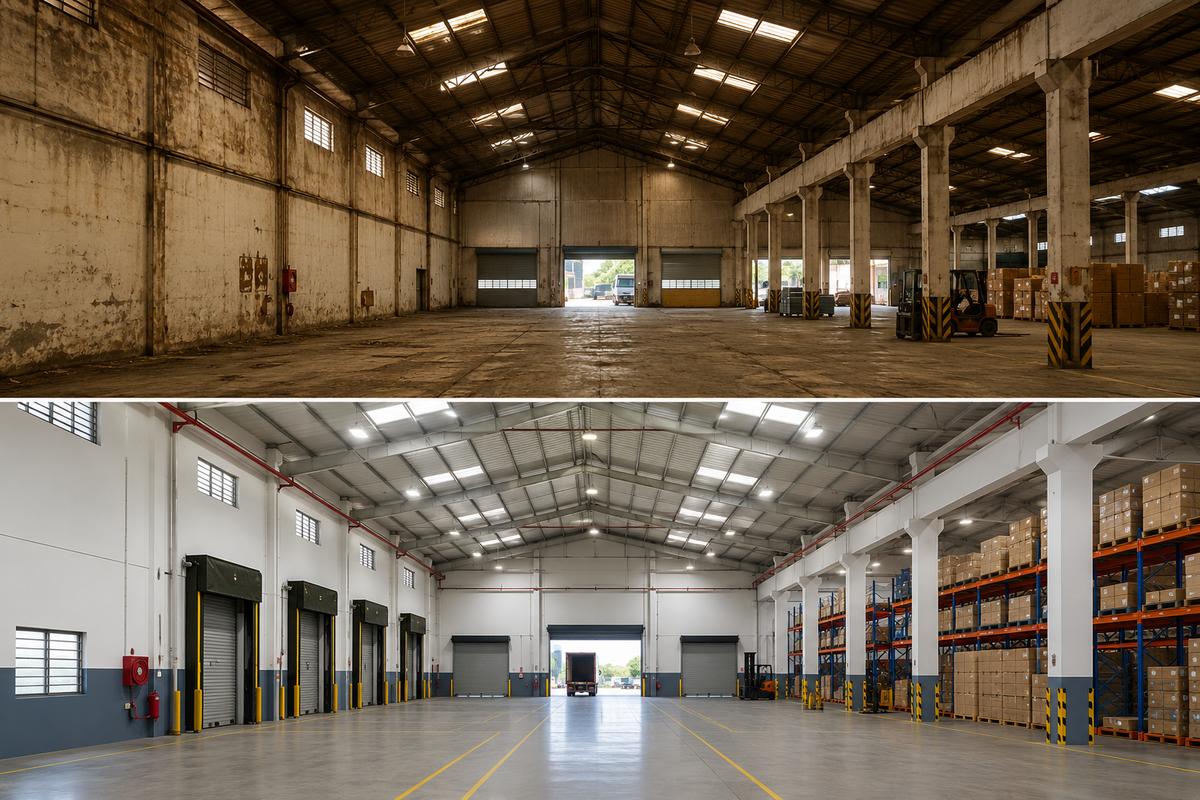
Imagine an older warehouse located just outside Bengaluru. Although the building is fifteen years old, it still provides excellent access to major highways and industrial customers. Replacing damaged flooring, improving dock operations and upgrading safety systems could deliver most of the benefits of a new warehouse without the expense of moving.
The Minimum Viable Upgrade List for Older Warehouses
Not every warehouse requires a complete transformation. The most successful retrofit projects begin by fixing the areas that directly affect safety, productivity and customer confidence.
Flooring
Uneven or damaged floors slow forklift movement, increase equipment wear and create safety risks. Strong, level industrial flooring supports faster material handling and reduces maintenance costs.
Dock Design
Older warehouses often have too few loading bays or poorly designed docks. Modern dock levellers, weather protection and improved vehicle access reduce truck waiting time and increase daily throughput.
Ventilation and Lighting
Poor airflow creates uncomfortable working conditions, especially during India’s summer months. Better ventilation and energy-efficient LED lighting improve employee productivity while lowering electricity consumption.
Fire Protection
Firefighting systems must comply with current safety requirements. Upgrading sprinklers, hydrants, alarms and emergency exits improves compliance while giving occupiers greater confidence in the facility.
Electrical Capacity
Many older warehouses were never designed for today’s automation, battery charging stations or warehouse management systems. Upgrading electrical infrastructure prepares the facility for future technology investments.
What Occupiers Inspect First
A freshly painted warehouse may look impressive, but experienced B2B buyers examine much more than appearances.
Before signing a lease, occupiers should inspect:
- Floor condition and load-bearing capacity
- Roof quality and water leakage history
- Fire safety certifications
- Dock efficiency and truck movement
- Ceiling height and storage potential
- Electrical reliability and backup power
- Security systems including CCTV and access control
- Ventilation and employee working conditions
- Maintenance records for recent upgrades
Think of it like purchasing a used commercial vehicle. New paint matters very little if the engine, brakes and suspension have not been maintained. Warehouses deserve the same practical inspection.
Making Grade B Space Commercially Usable
Many second-generation warehouses fall into the Grade B category. While they may not meet premium standards initially, targeted improvements can significantly improve their commercial value.
A well-planned retrofit can deliver:
- Faster loading and unloading
- Better inventory accuracy
- Improved regulatory compliance
- Higher employee safety
- Greater confidence for customers and auditors
- Support for value-added services such as packaging, labelling and quality inspection
For logistics providers, these improvements help attract larger enterprise customers who expect consistent operational standards across their supply chain.
Prioritising Capital Investment
Warehouse owners should focus on investments that generate the greatest operational return first.
Must-have improvements
- Structural repairs
- Industrial flooring upgrades
- Fire protection systems
- Dock improvements
- Electrical capacity upgrades
- Roof waterproofing
- Basic security systems
These upgrades directly affect safety, compliance and operational performance.
Nice-to-have improvements
- Office renovations
- Solar panels
- Smart sensors
- Advanced automation
- Building management systems
- Decorative landscaping
These enhancements create additional value but usually deliver stronger returns after the essential upgrades are complete.
Why City-Fringe Retrofits Make Business Sense
Industrial land near major cities continues to face supply constraints. Businesses serving urban markets often cannot afford to move farther away simply to occupy newer facilities.
Retrofitting warehouses in city-fringe locations offers a practical solution. Companies retain proximity to customers while improving operational quality. They avoid lengthy relocation projects and continue serving clients with minimal disruption.
For warehouse owners, modernisation also increases occupancy potential, supports higher rental values and extends the useful life of existing assets.
Final Thoughts
The future of warehousing is not only about building new facilities. It is also about making existing infrastructure work harder. A carefully planned warehouse retrofit in India can improve safety, efficiency and customer confidence while avoiding the cost and disruption of relocation.
As occupier expectations continue to rise in 2026, warehouse owners who invest in practical, high-impact upgrades will position themselves to compete more effectively in India’s growing logistics market. The right retrofit transforms an ageing warehouse into a productive business asset that delivers long-term value for both owners and occupiers.