India’s freight network has traditionally depended on roads, especially for domestic cargo. Trucks offer flexible pickup, direct delivery and frequent departures. However, rising transport costs, road congestion and pressure to reduce emissions are encouraging businesses to consider inland waterways and coastal shipping for suitable routes.
This shift is already visible. Cargo movement on India’s national waterways reached 145.84 million metric tonnes in FY 2024-25 and 198 MMT up to February 2026. By March 2026, 32 national waterways covering 5,155 kilometres were operational. The government aims to increase inland water transport’s modal share from around 2% to 5% by 2030.
India’s major ports also handled a record 915.17 million tonnes of cargo during FY 2025-26. This does not mean that every shipper should immediately move cargo from road to water. It does show that port capacity, terminals and connecting infrastructure are expanding.
The real opportunity lies in identifying where inland waterway logistics in India can support a specific cargo flow more efficiently.
Which Domestic Cargo Fits Water-Based Movement?
Water-based transport works best for cargo that moves in large, regular volumes and can tolerate longer transit times. Coal, fly ash, cement, fertilisers, food grains, steel, minerals, petroleum products and construction materials are natural candidates.
These goods usually share three qualities:
- They move in bulk.
- Their transport cost forms a meaningful part of the delivered price.
- They do not lose value quickly during a longer journey.
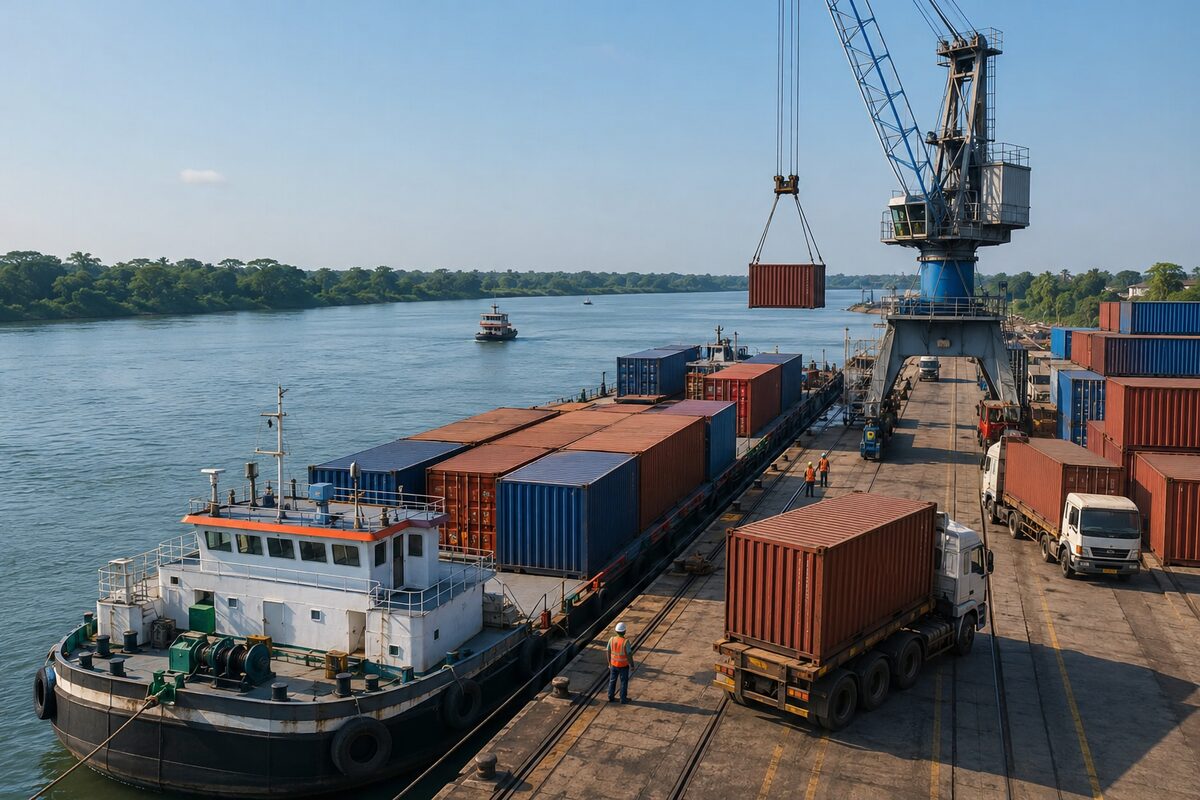
Containerised cargo can also move through inland or coastal routes when shippers have predictable volumes between suitable terminals. Automotive parts, packaged industrial products and certain consumer goods may qualify when the service offers regular sailings and reliable container handling.
Water transport is less suitable for urgent spare parts, highly time-sensitive products, short-distance deliveries or cargo that requires repeated handling precautions. For example, a factory that needs a machine component tomorrow will probably choose road or air. A cement company moving thousands of tonnes every month may gain more from a water-based route.
The right question is not whether waterways are cheaper than trucks. It is whether they are better for the cargo, volume and service promise involved.
The Corridor Logic Behind Modal Shift
Domestic multimodal transport is corridor-specific. A route works only when the origin, waterway or port, terminal and final customer fit together.
National Waterway 1 along the Ganga, National Waterway 2 along the Brahmaputra and National Waterway 16 connected to the Barak River offer opportunities in eastern and north-eastern India. Coastal routes can support cargo movement between port-linked regions along India’s western and eastern coasts.
However, the water leg is only one part of the journey. Trucks still need to carry cargo from the factory to the terminal and from the destination terminal to the customer. These first and last road connections can decide whether the entire plan succeeds.
Imagine a shipper located 40 kilometres from an inland terminal, with customers close to another terminal. The route may produce meaningful savings. If both road connections stretch for several hundred kilometres, extra handling and road costs may remove the advantage.
Terminal capacity also matters. Shippers should check storage space, loading equipment, vessel availability, operating hours and seasonal water depth before selecting a route.
Time Versus Cost Trade-Offs
Water-based movement can reduce the cost per tonne for large consignments, but shippers must measure the complete journey rather than compare only freight rates.
The calculation should include:
- Road transport at both ends
- Terminal handling and storage
- Loading and unloading
- Vessel freight
- Insurance and documentation
- Inventory held during transit
- Possible delays or product damage
A lower freight bill may still increase the total supply chain cost if the cargo spends several additional days in transit. Businesses may need more stock at the destination to protect customer service.
For example, a manufacturer saving ₹1 lakh on transport could lose that benefit if it must hold ₹30 lakh of extra inventory throughout the year. On the other hand, a predictable weekly water service may allow the company to plan stock accurately and retain much of the saving.
Reliability often matters more than speed. Customers can plan around a five-day journey that consistently takes five days. They struggle with a journey that takes anywhere between four and nine days.
How to Test Inland and Coastal Options Safely
Indian shippers should begin with a controlled pilot instead of shifting an entire route at once.
Choose one suitable cargo type, one corridor and a limited share of monthly volume. Keep the existing road option available during the test. Measure door-to-door cost, total transit time, schedule reliability, handling losses, inventory impact and customer delivery performance.
The pilot should cover several trips because one successful shipment does not prove that the route will remain dependable. Seasonal conditions, terminal congestion and vessel schedules can all affect performance.
Businesses can also divide their cargo by urgency. Regular replenishment stock can move by water, while urgent orders continue by road. This approach works like keeping a regular train service for planned travel and a car for last-minute needs.
Inland waterway logistics in India should complement road transport, not replace it everywhere. The strongest solutions combine water for efficient long-distance movement with dependable road connectors for flexible pickup and delivery.
For Indian shippers, success will come from choosing the right corridor, cargo and service design. A carefully measured pilot can reveal whether inland waterways or coastal shipping offer real savings without weakening customer commitments.