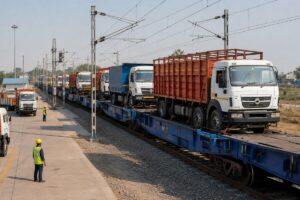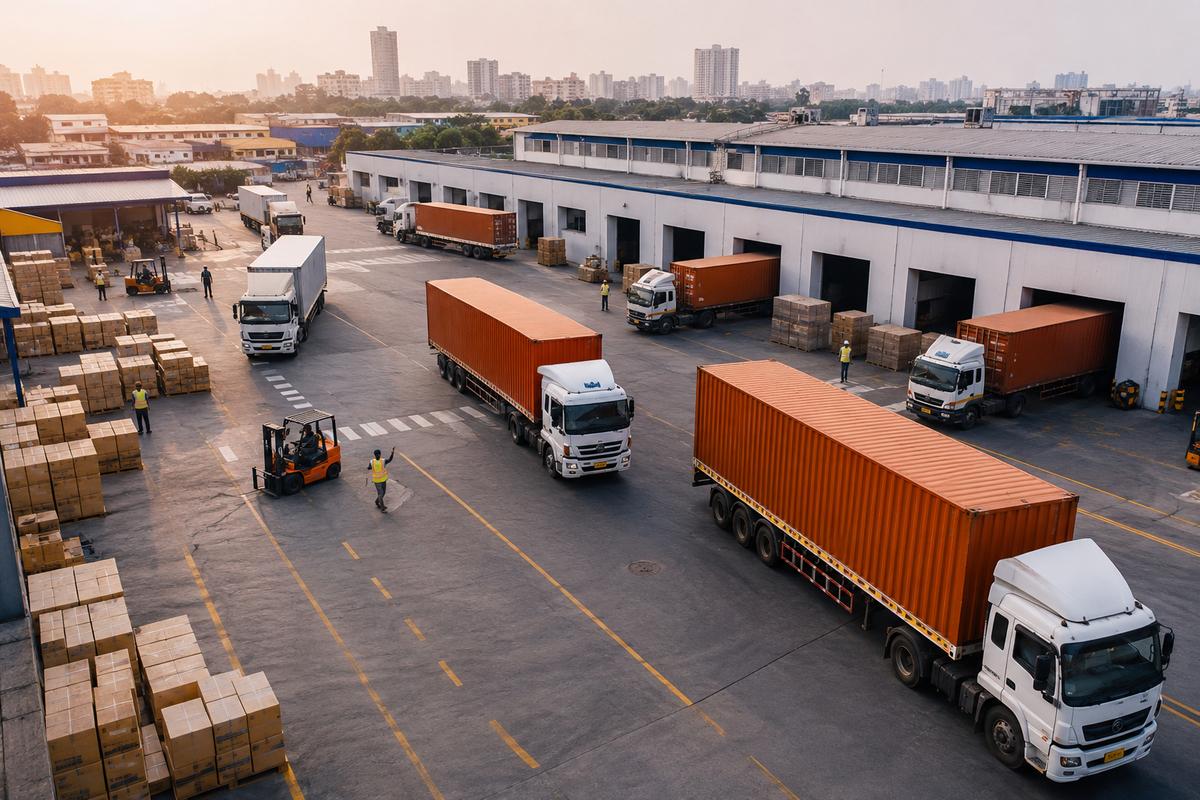
In Indian trucking, one of the biggest profit leaks happens when trucks return empty.
A truck delivers goods from Mumbai to Delhi, then drives back with no load. Fuel gets burned, the driver’s time gets used, toll costs continue, and the truck earns nothing during that return journey.
This is the logistics version of taking a paid taxi ride to the airport and then driving back home without a passenger.
For companies managing full truckload operations across India, reducing empty miles is one of the fastest ways to improve profitability, asset utilisation, and customer service. Backhaul optimisation in Indian trucking helps businesses turn unused return journeys into revenue-generating trips.
Here is a practical playbook for making that happen.
Start by Measuring the Leak
You cannot fix what you do not measure.
Many transport teams know empty trips are happening, but they rarely know how much money is slipping away.
Track these core metrics:
Empty Kilometre Percentage
This shows how much of your truck movement earns no revenue.
Formula:
Empty km ÷ Total km × 100
Example:
If a truck runs 2,000 km in a week, and 700 km are empty:
700 ÷ 2,000 × 100 = 35% empty km
That means over one-third of the movement creates cost without income.
Wait Time
Trucks often lose productive hours waiting at loading docks, warehouses, or customer locations.
For example:
A truck arriving at a warehouse at 9 AM but loading only at 3 PM loses six working hours.
Across dozens of vehicles, this becomes a major operational drain.
Backhaul Miss Rate
This measures how often a truck returns without securing a return load.
Formula:
Empty return trips ÷ Total completed trips
If 100 trucks complete outbound deliveries and 42 return empty, your miss rate is 42%.
Corridor-Level Visibility
Do not measure only at the company level.
Break performance by:
- Mumbai–Delhi
- Chennai–Hyderabad
- Bengaluru–Pune
- Ahmedabad–Nagpur
Some corridors naturally support stronger return loads than others.
Cluster customers geographically as well.
If five customers in North India consistently generate outbound freight but no return opportunities, your planning model needs adjustment.
Build Smarter Backhaul Networks
Once the numbers are clear, redesign how routes operate.
Paired Lanes
This is the simplest backhaul model.
You intentionally match two corridors with balanced freight demand.
Example:
- FMCG loads move from Mumbai to Delhi
- Auto components move from Delhi to Mumbai
Instead of treating these as separate transport jobs, treat them as one connected route plan.
This improves truck utilisation without adding vehicles.
Think of it like booking round-trip airline tickets instead of one-way flights.
Triangular Routing
Sometimes a clean return route does not exist.
In that case, create triangle routes.
Example:
- Leg 1: Bengaluru to Chennai
- Leg 2: Chennai to Hyderabad
- Leg 3: Hyderabad to Bengaluru
Instead of chasing perfect round trips, you create a loop that keeps the truck productive.
This works especially well for sectors like industrial goods, FMCG, electronics, and automotive distribution.
Shared Capacity Rules
Not every return load needs to come from the same customer.
Shared capacity allows transport planners to combine freight from compatible customers.
Example:
A truck delivering packaged goods to Jaipur can pick up industrial supplies for Ahmedabad on the return path.
The key is disciplined planning.
Set rules for:
- Delivery priority
- Maximum allowable detour distance
- Vehicle compatibility
- Loading time thresholds
- Customer SLA protection
Without guardrails, shared capacity creates chaos instead of efficiency.
Design Better Contracts
Operations alone cannot solve empty miles.
Commercial agreements must support smarter utilisation.
Flexible Dispatch Windows
Rigid pickup times make backhaul planning difficult.
Example:
If Customer A insists on pickup only between 10 AM and 11 AM, planners lose flexibility to match return freight.
A wider dispatch window creates options.
Instead of:
Pickup at exactly 10 AM
Use:
Pickup between 9 AM and 1 PM
That simple shift improves planning flexibility significantly.
Flexible Drop Locations
Sometimes the ideal return load does not end at the original city.
Example:
A truck leaving Pune may not find a return load to Pune, but it may find one to Nashik.
If contracts allow reasonable alternate delivery points, planners gain more matching opportunities.
Repeatable Schedules
Predictability helps everyone.
Fixed weekly freight patterns allow planners to pre-build efficient backhaul models.
For example:
- Monday: Mumbai to Delhi
- Tuesday: Delhi regional delivery
- Wednesday: Delhi to Jaipur pickup
- Thursday: Jaipur to Mumbai return
Repeatable schedules reduce guesswork.
Track the Right KPIs
Improvement requires discipline.
Focus on metrics that show real utilisation gains.
Revenue Kilometre Percentage
How much of the total movement earns revenue?
Formula:
Revenue km ÷ Total km × 100
Higher is better.
Empty Kilometre Percentage
The inverse metric.
This shows waste directly.
Target continuous reduction corridor by corridor.
Trip Cycle Time
How long does a complete delivery-and-return cycle take?
Long idle times often indicate poor coordination.
Example:
If one corridor averages 5 days and another similar corridor averages 3.5 days, investigate the gap.
Cost Per Tonne-Kilometre
This helps compare route efficiency.
Formula:
Total transport cost ÷ total tonne-km moved
A falling number usually indicates stronger utilisation.
A Practical Example
Imagine a fleet handling Bengaluru to Delhi shipments.
Current performance:
- Total trip distance: 2,150 km
- Empty return: 900 km
- Empty km: 42%
- Trip cycle: 6 days
After applying backhaul optimisation:
- Shared return loads from NCR
- Flexible dispatch contracts
- Triangular routing via Hyderabad
Updated performance:
- Empty return: 280 km
- Empty km: 13%
- Trip cycle: 4.5 days
- Better asset availability
- Lower fuel cost per trip
Same truck. Better planning. Better economics.
Final Thoughts
Backhaul optimisation in Indian trucking is not about squeezing drivers or overloading schedules.
It is about smarter planning.
Every empty kilometre is a missed business opportunity.
Companies that measure corridor performance, redesign routes, and align contracts with operational reality can improve fleet productivity without expanding assets.
In a competitive freight market, the winners are often not the companies with more trucks.
They are the ones that use every kilometre better.