Long-haul full truckload transport often depends on one driver covering most or all of a journey. The driver must balance delivery schedules with mandatory rest, traffic delays, meals and vehicle checks. These demands can make transit times difficult to predict and place unnecessary pressure on drivers.
Relay trucking offers a different approach. Under this model, drivers complete defined sections of a route and exchange responsibility at planned relay hubs. The truck keeps moving, while each driver works within a manageable region. As logistics networks become more time-sensitive, relay trucking in India could help transporters improve reliability without compromising driver welfare.
How Does the Relay Trucking Model Work?
In a conventional long-haul trip, one driver may take a truck from the origin to the destination. Depending on the distance, the journey can involve overnight stops and long periods away from home.
A relay model divides the route into shorter sections. At a designated hub, the arriving driver hands the truck to another rested driver. Some networks swap only the driver, while others exchange trailers or containers between vehicles.
Think of it like a relay race. Each runner covers one section before passing the baton. In trucking, the “baton” includes the vehicle, cargo, documents and trip information. The handover must remain accurate, secure and quick.
Relay hubs may operate near major highways, logistics parks, fuel stations, warehouses or company branches. They should also provide safe parking, lighting, washrooms and rest facilities.
When Is Relay Trucking Practical?
Relay operations need more than a long route and available drivers. They work best when a lane has enough regular freight volume to support fixed schedules.
A suitable lane usually has:
- Consistent FTL movement in both directions
- Sufficient distance to justify multiple driving sections
- Relay hubs placed at practical driving intervals
- Predictable dispatch and delivery schedules
- Reliable access to drivers, fuel and maintenance support
- Enough return loads to reduce empty running
For example, a daily high-volume route between two industrial regions may suit a relay model better than a lane that receives only two or three irregular trips each month.
Hub spacing also matters. If drivers must travel too far between relay points, the model may not improve rest or home time. If hubs sit too close together, frequent handovers may add cost and delay. Operators should study actual driving hours, congestion patterns, toll points and safe stopping locations before selecting nodes.
A Strong Handover Process Is Essential
Every relay handover needs a clear standard operating procedure. Without one, responsibility can become unclear when delays, damage or shortages occur.
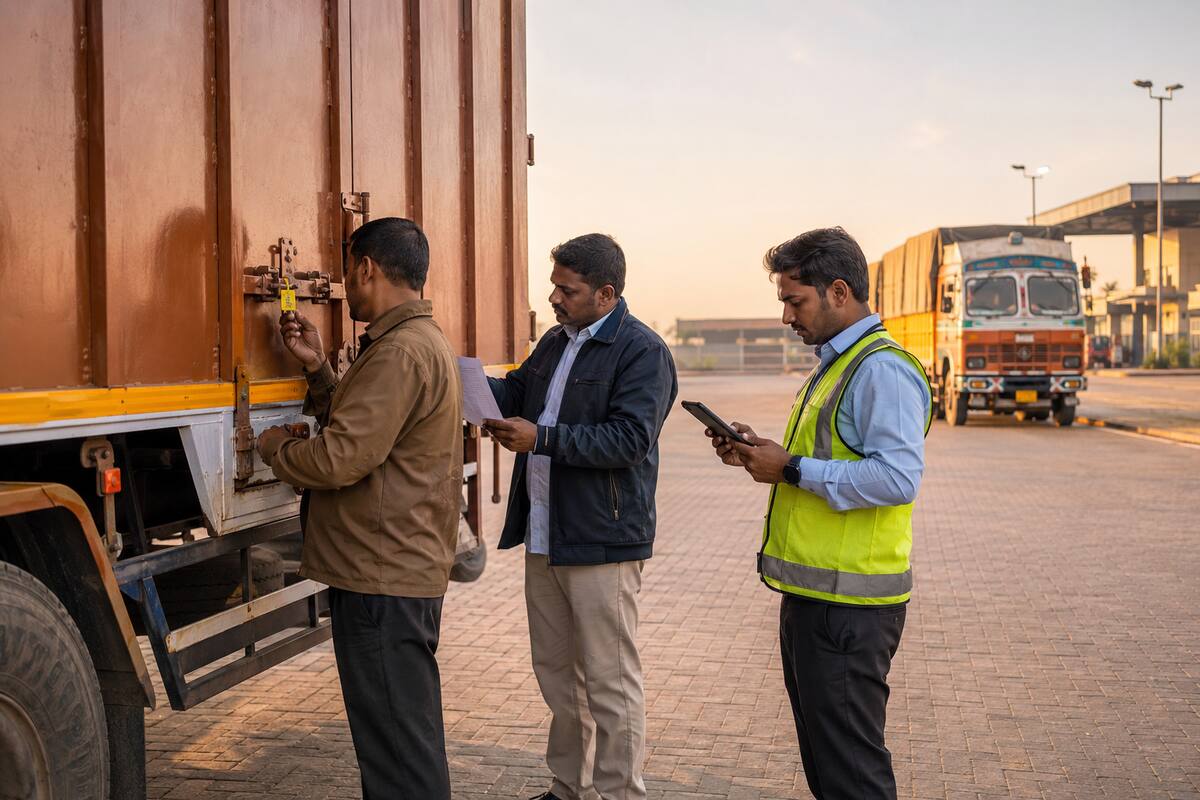
The arriving and departing drivers should verify:
- Cargo seal number and seal condition
- Transport documents and permits
- Tyres, lights, brakes and visible vehicle condition
- Fuel level and refuelling records
- Current location and trip status
- Pending delivery instructions
- Existing delays, damages or mechanical concerns
- Ownership of open exceptions
A digital checklist can record the handover time, photographs, signatures and vehicle observations. The logistics supervisor should review any mismatch before releasing the truck. This process works like a hotel shift change: the next team must know what happened earlier, what remains pending and what needs immediate attention.
Potential Benefits of Relay Trucking
The most important benefit may be better transit predictability. A rested driver can take over at a planned time, allowing the vehicle to continue without depending on one person’s endurance.
Relay trucking can also support:
- Safer driving through planned rest periods
- Higher vehicle utilisation across long routes
- More consistent arrival windows
- Reduced driver fatigue
- Better home time for drivers working regional sections
- Faster response to route or vehicle exceptions
Better home time may also help transport companies attract and retain professional drivers. A driver who regularly returns to a home region may find the job more sustainable than spending several days continuously on the road.
Risks That Operators Must Address
Relay trucking does not remove operational risk. It changes where and how the risk appears.
A late incoming truck can leave the next driver waiting and disrupt the remaining schedule. Weak handover records can create arguments about vehicle damage, fuel shortages or cargo seal problems. Maintenance issues may also pass from one driver to another without clear ownership.
Other risks include cargo theft at poorly secured hubs, inconsistent performance between relay locations, driver absenteeism and weak coordination during road closures or major delays.
Operators need secure hubs, trained supervisors, backup drivers and clear escalation rules. One central control team should monitor the complete journey instead of allowing each relay point to treat its section as an isolated trip.
KPIs for a Relay Trucking Pilot
Companies should test the model on one stable lane before expanding it. A pilot should track:
- Scheduled versus actual handover time
- Total door-to-door transit time
- Transit-time variation across trips
- Driver waiting time at each hub
- Safety and cargo-security incidents
- Vehicle breakdowns and maintenance exceptions
- Fuel consumption
- Cost per completed trip
- Driver working hours and home-time improvement
- On-time pickup and delivery performance
The pilot should compare these results with similar single-driver trips. A faster average journey means little if costs rise sharply or delivery variation remains high.
Building a Safer and More Predictable FTL Network
Relay trucking can improve long-haul FTL operations when transporters choose the right lanes, position hubs carefully and enforce disciplined handovers. It is not a shortcut for every route. It is a planned operating model that depends on volume, consistency and accountability.
For Indian logistics companies, a focused relay trucking pilot can show whether driver swaps deliver safer journeys, better vehicle use and more dependable transit times. With the right systems and people, the model can support both business performance and driver wellbeing.