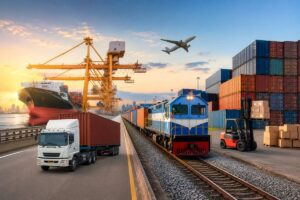
India’s freight network is entering a stage where road and rail can work together instead of competing for every shipment. Trucks-on-Trains, commonly called ToT, offers a practical example of this shift.
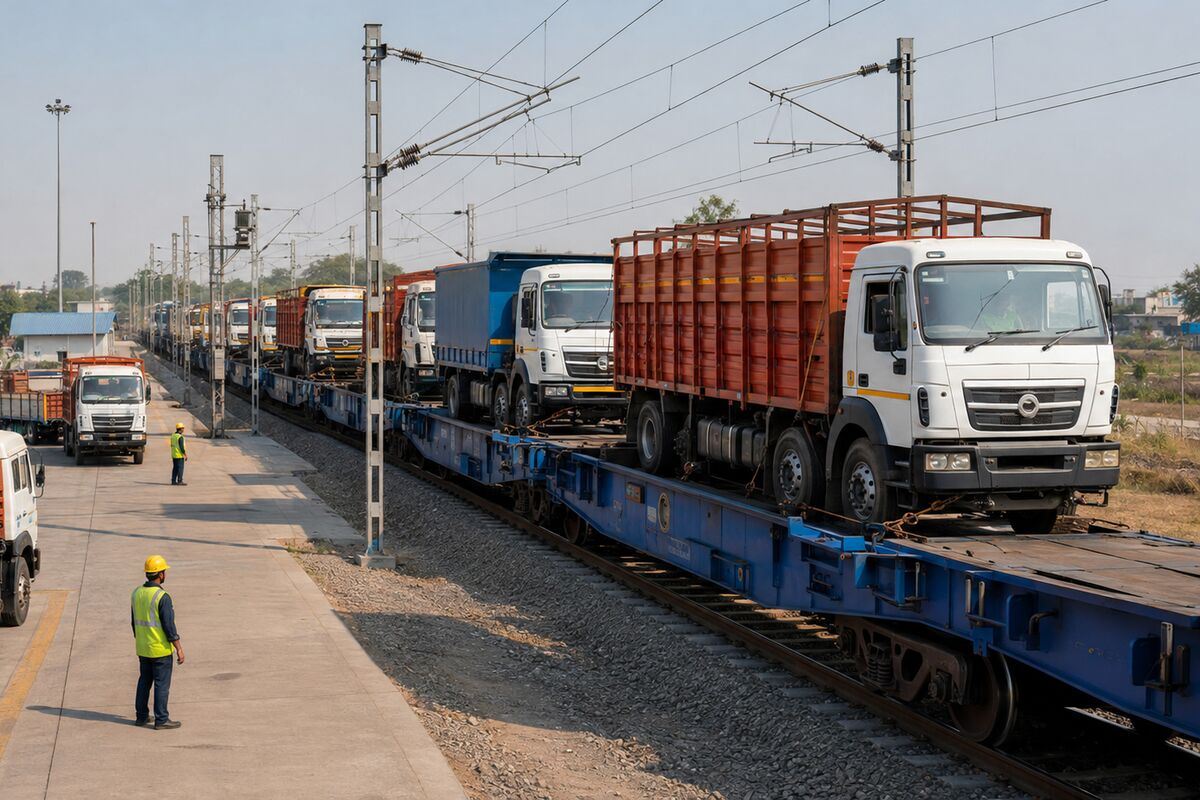
The service places loaded trucks on specially designed railway wagons for the main part of a long journey. Trucks handle the collection and final delivery, while rail covers the longer distance between terminals. This model combines the flexibility of road transport with the carrying capacity and efficiency of rail.
In January 2026, the Ministry of Railways reported that ToT was operating between New Palanpur and New Rewari on the Western Dedicated Freight Corridor. The 636-kilometre service reduced the stated journey time from nearly 30 hours by road to around 12 hours through ToT. Between April and December 2025, it handled 545 rakes and transported more than three lakh tonnes of freight. These figures show that ToT is developing into a credible multimodal service, rather than remaining a small trial.
Trucks-on-Trains explained for B2B shippers
A normal full truckload journey keeps the vehicle and driver on the road from origin to destination. With ToT, the truck travels to a railway terminal, boards a flat wagon and completes most of the journey by train. After reaching the destination terminal, it returns to the road for delivery.
Think of the model as an express bridge across the longest and most demanding part of a route. The truck still reaches factories, warehouses and retail distribution points, but it avoids hundreds of kilometres of highway driving.
This approach can reduce fuel use, highway exposure and driver fatigue. It can also improve delivery consistency when the railway schedule is dependable. Because the Dedicated Freight Corridors use electrified tracks built for freight movement, shifting the main journey to rail may also reduce the emissions linked to each shipment.
However, ToT does not automatically improve every route. Its value depends on shipment volume, terminal access, train frequency and the quality of road operations at both ends.
Which lanes may suit the model?
High-frequency lanes offer the strongest starting point. A shipper moving several truckloads every day between the same two regions has a better chance of filling regular rail capacity than a company sending one vehicle occasionally.
The New Palanpur to New Rewari route demonstrates this logic. It connects freight activity in Gujarat and neighbouring western regions with markets in North India. Dairy, food, fast-moving consumer goods and other regular cargo flows can support repeat services on such a corridor.
Other lanes may become suitable when they share several characteristics:
- The road distance is long enough for rail savings to matter.
- Both ends sit reasonably close to compatible terminals.
- Freight volumes remain steady across the week.
- Delivery windows allow trucks to match scheduled departures.
- The cargo can remain inside the truck without unnecessary unloading.
The model becomes less attractive when a terminal requires a long diversion, shipment volumes change sharply or delivery commitments cannot wait for the next train. For example, saving eight hours on the rail journey means little if a truck waits ten hours outside the terminal.
Shippers should compare the complete door-to-door movement, not just the rail charge. The calculation should include terminal travel, waiting time, loading procedures, fuel savings, toll savings and the cost of keeping vehicles and drivers occupied.
The terminal and handling realities
Terminals determine whether the service works smoothly. A train may move quickly, but poor coordination at either end can erase much of that advantage.
Truck arrival slots must match train schedules. Terminal teams need clear procedures for vehicle checks, documentation, loading and release. The destination team must also be ready to move trucks out quickly after the train arrives.
First and last-mile execution matters just as much. If a factory misses its pickup slot or a consignee cannot receive the cargo, the entire schedule can slip. Shippers therefore need shared tracking, clear escalation contacts and realistic time buffers.
Capacity is another consideration. A company may want daily departures, but the available timetable may support only selected days or departure windows. Businesses should test the service using repeat shipments before redesigning an entire distribution network around it.
Indian Railways’ wider DFC performance provides an encouraging foundation. In July 2026, the Ministry stated that the Eastern and Western corridors had been commissioned and were handling more than 443 trains per day on average. Still, each proposed ToT lane needs its own operational assessment.
What ToT could mean for FTL service design
ToT does not reduce the importance of full truckload partners. It changes what strong FTL partners must provide.
In a multimodal network, the road partner becomes responsible for more than driving between two cities. It must coordinate terminal slots, protect departure times, manage drivers at both ends, track exceptions and maintain delivery commitments across road and rail.
Shippers can treat ToT as strategic when they have stable volumes on a suitable corridor. They can use it tactically during peak demand, highway disruption or seasonal pressure. The model may still be premature when terminals are too distant, departures are infrequent or shipment volumes remain unpredictable.
The future FTL partner will therefore act as the connecting layer in a broader multimodal service. Companies that combine dependable road capacity with rail coordination and clear shipment visibility will help shippers gain the benefits of both modes without adding unnecessary complexity.