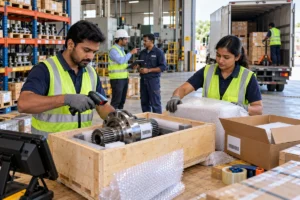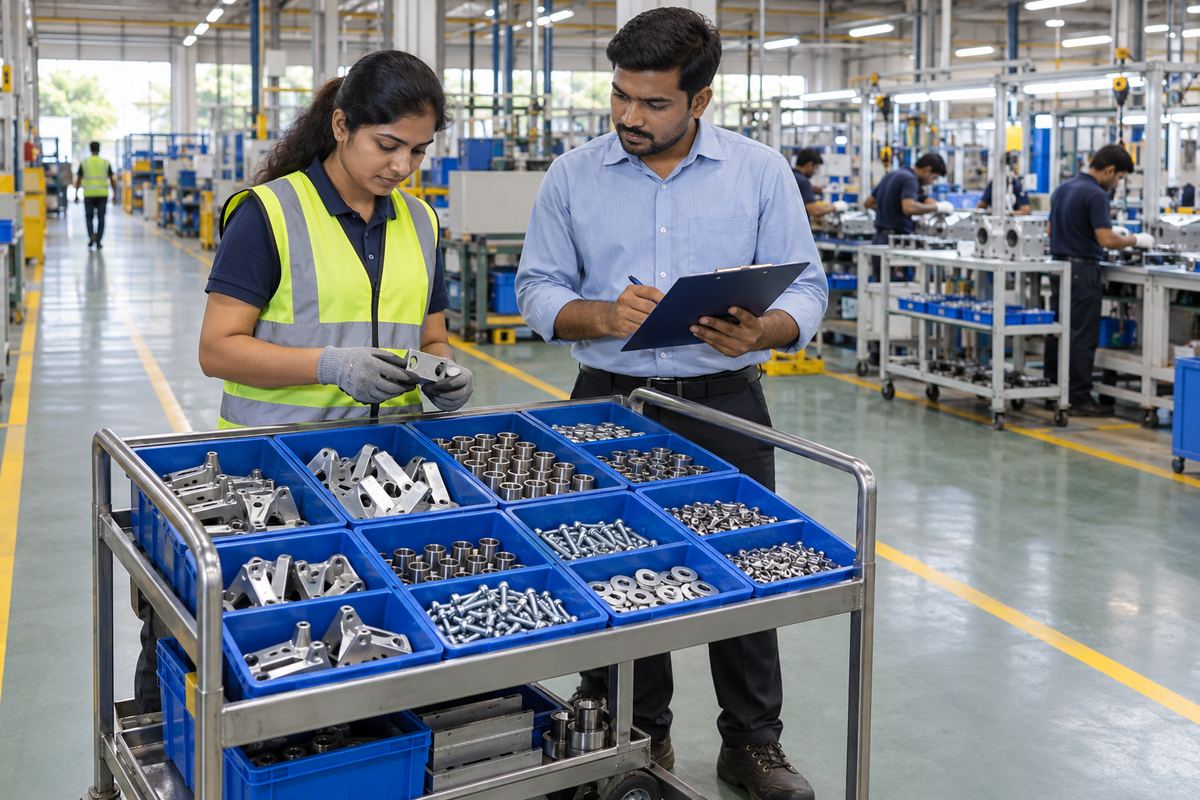
An assembly operator has the housing, brackets and bolts ready, but two washers are missing. Someone leaves the workstation to find them. The parts may already be inside the factory, yet the job still waits because nobody checked the complete set before sending it to the line.
Production kitting groups the approved components and quantities needed for a defined assembly task. The kit travels with a reference linking it to the production order, so stores and production teams can check the same requirement.
For manufacturers reviewing production kitting logistics in India, start with a clear parts list and a release rule that makes incomplete kits easy to identify.
Link every kit to the production order
Use the current approved bill of materials, meaning the parts list and quantities required to make the product. Confirm the model, revision and number of units in the production order before picking begins.
Define whether one kit serves one finished unit, a production batch or a particular assembly stage. Label the container with the order reference, intended workstation and required delivery time. Include batch or serial details where the product requires traceability.
Keep the compartments and identification consistent so employees can distinguish similar-looking parts. If the production order changes, review kits already prepared before releasing them to the line.
Hold incomplete kits with a clear shortage record
Give incomplete kits a separate holding area and an unmistakable status. Record the missing item, required quantity, available quantity and person following up. Update planning when the shortage threatens the production schedule.
The Logistics Sector Skill Council’s kitting guidance describes checking components against the parts list, identifying missing or damaged items, setting incomplete kits aside and verifying them again after adding the required parts.
Set a named owner for each shortage. Agree when they will report the next update, and keep the kit on hold until the designated reviewer confirms its release.
Verify the kit and control substitutes
Before release, check part identity, quantity and condition against the approved list. Use a second check or a validated scan process appropriate to the product. Record who prepared and verified the kit.
An available component may look suitable while having a different specification. Obtain documented approval from the authority named in the plant’s substitution procedure, such as engineering or quality, before using it. Record the approved alternative against the affected order.
After a shortage correction or substitution, check the complete kit again. Remove superseded instructions so the receiving operator can identify the authorised configuration.
Compare loose parts with a checked kit
Consider a hypothetical order for ten small assemblies. Each needs one housing, two brackets, four bolts and four washers. The full requirement is ten housings, twenty brackets, forty bolts and forty washers.
If stores delivers those components in separate bulk containers but supplies only thirty-eight washers, the assembly team may discover the shortage while working.
Checking and allocating parts into individual kits reveals that nine kits can be complete and the tenth is short of two washers. Planning can then decide whether to release the nine complete kits in the approved sequence while the final kit remains on hold.
Kitting exposes the shortage earlier. It still requires someone to obtain the missing parts and close the issue.
Plan replenishment and the return of unused parts
Agree when each workstation needs its next kit and how the material-handling team will deliver it. Size the trolley or container for safe handling and the available space beside the line.
Record the handover so production and stores know which order received which kit. Define how staff request the next supply and who responds when consumption differs from the plan.
Return unused components through an agreed checking process. Confirm identity, quantity and condition before placing them back into stock, and reconcile returns against the production order.
Measure complete kits ready when needed
Track the share of required kits that are verified and ready by the agreed line-delivery time. Compare this with shortages reported after kit release, and investigate the causes.
Start with one product family and review the preparation effort, space requirement and production interruptions. Use the results to refine the process before extending it.
Discuss in-plant logistics with PTC
Explore PTC’s inbound and outbound logistics services and contact Prakash Transport Corporation to discuss your in-plant material flow and kitting requirements. Share your assembly sequence, parts profile and recurring shortages so the team can review the operating needs with you.