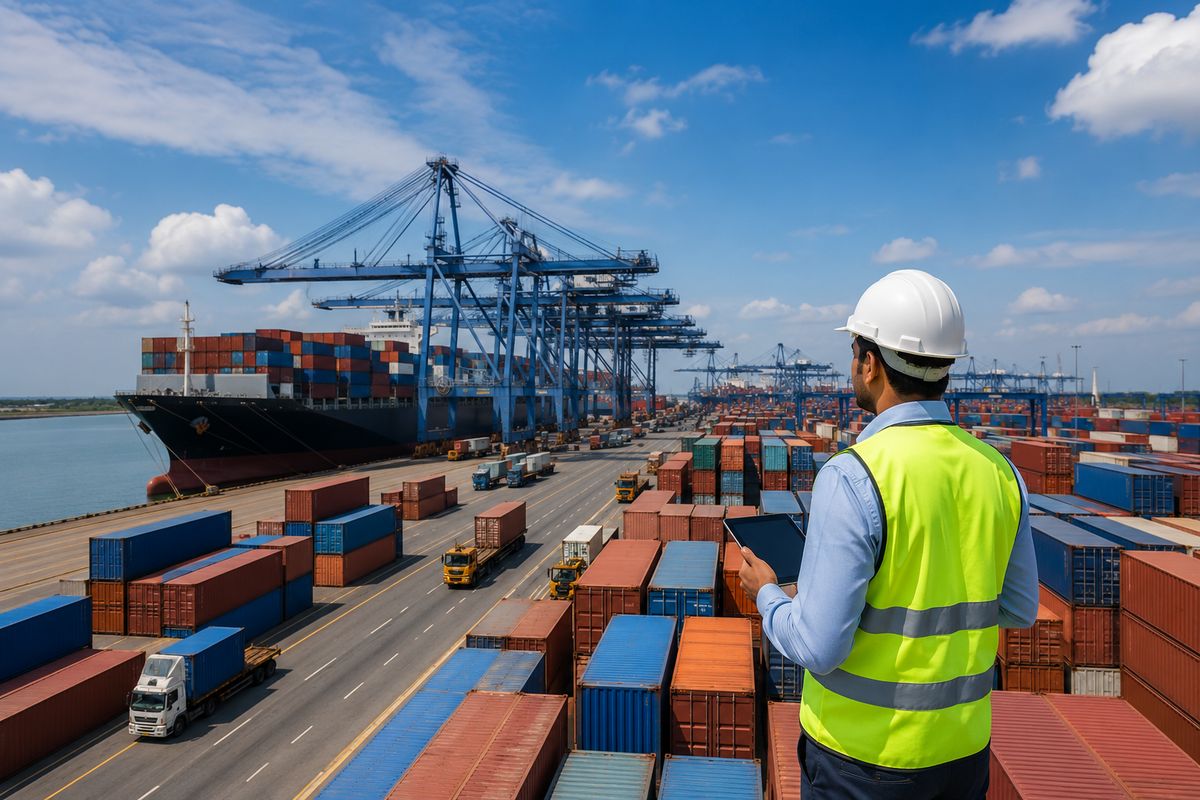
India’s trade network continues to expand, and so does the importance of choosing the right logistics gateway. During FY 2025-26, India’s major ports handled 915.17 million tonnes (MT) of cargo, reflecting the country’s growing role in global trade. At the same time, digital platforms such as the Logistics Data Bank (LDB) and ULIP-linked visibility tools now provide better insights into shipment movement, corridor performance, and container dwell times.
This creates an opportunity for businesses to rethink their logistics strategy. Instead of depending on a single port, many importers and exporters are evaluating port diversification in India’s supply chain strategies to improve reliability, reduce disruption risks, and create more flexible transportation networks.
The key is not to spread cargo everywhere. It is to build smarter options that support business continuity.
The Cost of Over-Reliance on One Gateway
Using a single port for every shipment may seem simple, but it also creates a single point of failure.
Imagine a factory that has only one entrance. If that entrance becomes blocked, every delivery stops until the road is clear. The same principle applies to ports.
Weather disruptions, vessel delays, customs congestion, labour shortages, or temporary infrastructure maintenance can quickly affect shipment schedules. Even if the issue lasts only a few days, delayed cargo can disrupt production schedules, customer commitments, and inventory planning.
Businesses that depend entirely on one gateway often have fewer alternatives when unexpected events occur.
Diversification does not eliminate delays, but it gives companies options when conditions change.
Port Choice Is Really Corridor Choice
Many businesses focus only on selecting a port. In reality, they should evaluate the complete logistics corridor.
A shipment does not begin or end at the port. It travels through inland container depots (ICDs), warehouses, highways, rail connections, customs checkpoints, and final delivery locations.
When comparing corridors, consider factors such as:
- Port dwell time
- Distance to manufacturing plants
- Quality of road and rail connectivity
- Availability of container trucks
- Customs processing efficiency
- Proximity to customers and distribution centres
- Reliability during seasonal disruptions
For example, two ports may offer similar ocean freight rates. However, one may have faster inland rail access and more dependable trucking capacity, allowing cargo to reach the factory several days earlier.
Looking beyond the port helps businesses understand the true cost and reliability of the entire supply chain.
Primary Versus Secondary Gateway Strategy
Diversification does not mean dividing cargo equally between multiple ports.
A practical approach is to establish a primary gateway supported by a carefully selected secondary gateway.
The primary gateway continues to handle most shipments because it delivers the best balance of cost, transit time, and operational familiarity.
The secondary gateway serves as a backup that can absorb additional volume when needed. It also provides flexibility during seasonal congestion, unexpected disruptions, or capacity constraints.
For example:
- A manufacturer in western India may continue using its preferred western port for most exports.
- If vessel schedules become congested or transport capacity tightens, selected shipments can move through another nearby gateway without disrupting customer deliveries.
This approach allows businesses to maintain operational stability while reducing dependence on a single logistics route.
When Diversification Improves Resilience
Diversification works best when it solves a genuine business challenge.
It can provide value when:
- Customer demand spans multiple regions.
- Manufacturing locations serve different export markets.
- Seasonal congestion regularly affects one corridor.
- Growing shipment volumes require additional capacity.
- Supply chain continuity is a high business priority.
However, diversification may not always be the right answer.
Managing multiple ports requires additional planning, documentation, transportation partners, and operational coordination. Smaller shipment volumes spread across several gateways may reduce negotiating power with logistics providers and increase administrative work.
The objective should always be better service and lower overall risk, not simply using more ports.
How to Diversify Without Fragmenting Operations
A successful diversification strategy begins with data rather than assumptions.
Start by reviewing current shipment patterns and identifying where delays or additional costs occur.
Evaluate each potential corridor using measurable indicators such as:
- Average cargo dwell time
- Inland transportation reliability
- Container availability
- Customs clearance consistency
- Trucking capacity during peak periods
- Overall transit time
- Total logistics cost
Run pilot shipments through alternative gateways before making long-term changes.
Work closely with logistics partners, transport providers, and customs agents to understand how each corridor performs under normal and peak operating conditions.
Digital visibility platforms also help compare performance across different routes, making future planning more informed.
2026 Checklist for Indian Importers and Exporters
Before redesigning your logistics network, ask these questions:
- Are we overly dependent on one port?
- Which alternative gateway serves our customer locations effectively?
- Have we compared total corridor performance instead of only ocean freight rates?
- Do we understand dwell times across different ports?
- Is trucking and rail capacity available during peak seasons?
- Have we tested alternative corridors with pilot shipments?
- Can our logistics partners support operations across multiple gateways?
- Does diversification improve customer service while keeping operations manageable?
Conclusion
As India’s logistics infrastructure becomes more connected and data-driven, businesses have better tools than ever to make informed network decisions.
A successful port diversification in India’s supply chain strategy is not about using every available gateway. It is about selecting the right combination of primary and secondary corridors that balance cost, reliability, customer service, and operational simplicity.
Companies that regularly evaluate their logistics network, measure corridor performance, and prepare practical alternatives will be better positioned to manage disruptions while supporting long-term business growth. In today’s competitive environment, flexibility is becoming just as valuable as efficiency.