A truck rarely moves from normal operation to a roadside breakdown without giving some warning. The warning may appear as a rising engine temperature, repeated fault code, weak battery reading, unusual fuel use or a concern reported by the driver. The challenge is noticing the pattern early enough to act.
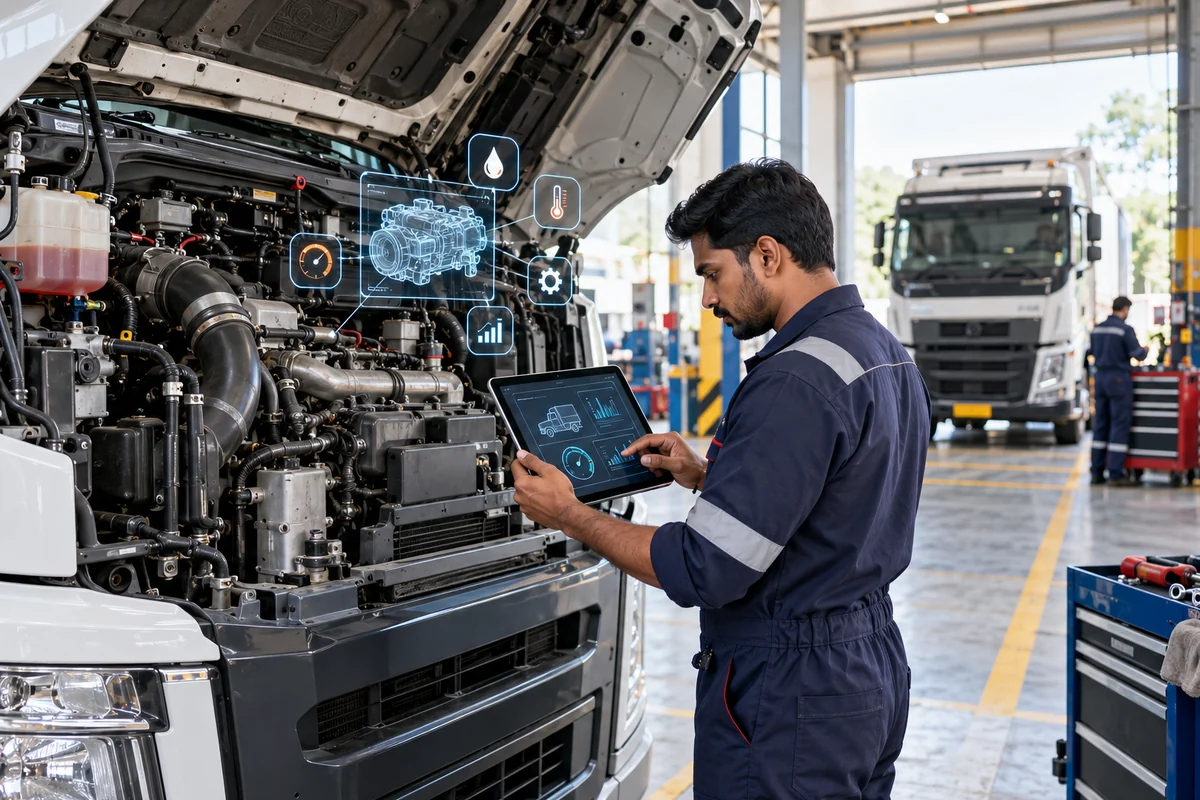
For fleet operators exploring predictive maintenance for truck fleets in India, telematics can support that early action. It helps maintenance teams use vehicle condition data to decide what needs attention and when. The goal is simple: repair a developing fault during a planned workshop visit instead of dealing with it after the vehicle stops on the road.
Reactive, preventive and predictive maintenance
Reactive maintenance begins after a component fails. The team must recover the vehicle, arrange repairs and protect the delivery schedule. Towing, missed trips and emergency parts can quickly increase the cost.
Time-based preventive maintenance follows a fixed interval based on kilometres or operating days. It suits routine service items, but similar vehicles may operate under very different conditions.
Predictive maintenance uses changes in vehicle condition to identify when attention may be required. A truck carrying heavy loads on steep routes may wear differently from one running steady highway trips.
Predictive methods do not replace scheduled servicing, inspections or driver feedback. They add another source of information to the maintenance decision.
Use signals that the workshop can act on
Telematics systems can produce large volumes of data. That data only helps when the workshop can connect a signal to a practical check.
Useful inputs include engine fault codes, coolant temperature, battery voltage, tyre pressure, fuel changes and service history. Driver reports matter too. A driver may notice unusual vibration or reduced pulling power before a sensor raises an alert.
The team should look for combinations rather than isolated readings. One low battery reading may result from a recording error. A steady voltage decline, difficult morning starts and an ageing battery create a stronger case for inspection.
Set alert levels that match the risk
Every alert should have a severity level and a defined response. A brake-related warning or severe overheating event may require the truck to stop and receive immediate inspection. A gradual fall in battery performance may allow the workshop to schedule a check at the end of the current trip.
Without these rules, important warnings may disappear among routine notifications. Each alert should identify the vehicle, condition, priority and next action.
Review thresholds as operating history grows. If an alert repeatedly finds no fault, adjust the rule instead of sending technicians back to the same false warning.
Connect each alert to workshop action
A telematics alert does not repair a vehicle. It needs to become a work order with an owner and planned completion time.
Before bringing the truck into the workshop, confirm technician availability, parts stock and a suitable service slot. Fleet planners also need the expected repair time so they can arrange another vehicle if required.
After the work is completed, the technician should record the inspection, parts replaced, test result and closure evidence. Linking this information back to the original alert helps the team judge whether the warning was accurate.
Start with one failure mode
A fleet does not need to predict every possible breakdown on the first day. A focused pilot is easier to manage and explain.
The team might begin with battery failures across a small group of vehicles. It can compare voltage trends, starting complaints, battery age and replacement records. Once technicians trust the alerts and the process works reliably, the fleet can add another area such as cooling-system issues or tyre pressure.
This staged approach also limits false alerts. Drivers and technicians are more likely to use a new system when it points them towards real problems instead of creating extra paperwork.
Measure whether the programme works
The programme should track roadside breakdowns, unplanned downtime, maintenance cost and vehicle availability. Alert accuracy also deserves attention. If one hundred alerts lead to only two confirmed faults, the rules need improvement.
Planned inspections may initially increase workshop activity because the team finds developing faults earlier. Over time, the result should appear through fewer emergency repairs and better vehicle availability.
PTC Tech Platform can help connect vehicle signals with maintenance workflows and fleet planning. When telematics data reaches the right person with a clear action, it becomes more than a dashboard. It becomes a practical tool for keeping trucks available and freight moving.