Fuel represents one of the largest operating costs for a commercial truck fleet. While fleet owners cannot control fuel prices, they can influence how efficiently each vehicle uses fuel.
Harsh acceleration, unnecessary idling, speeding and poor gear selection may appear to be small issues during one trip. Across hundreds of vehicles and thousands of kilometres, however, these habits can create significant fuel waste.
For companies exploring eco-driving for truck fleets in India, the goal should not be to blame drivers. A better approach combines practical training, fair use of telematics and disciplined vehicle care. This helps drivers improve while supporting safer and more efficient fleet operations.
Driving Habits That Influence Fuel Consumption
A loaded commercial truck needs more fuel when the driver accelerates sharply. Frequent acceleration followed by sudden braking also wastes the vehicle’s momentum. It is similar to repeatedly opening and closing a water tap instead of maintaining a steady flow.
Speeding can increase fuel consumption because the engine must work harder to overcome air resistance. It can also reduce the time available to react to road conditions.
Unnecessary idling creates another hidden cost. Trucks may remain running at loading gates, rest stops or customer facilities even when the vehicle does not need engine power. Tracking the reason behind each idle period helps the fleet separate avoidable idling from operational delays.
Drivers can also improve efficiency by selecting the right gear, maintaining a steady speed and anticipating traffic conditions. Eco-driving does not mean driving unusually slowly. It means using the vehicle’s power smoothly and safely.
Turn Telematics Data into Useful Coaching
Telematics systems can record speed, braking, acceleration, engine idling and other vehicle events. However, collecting data alone does not improve performance.
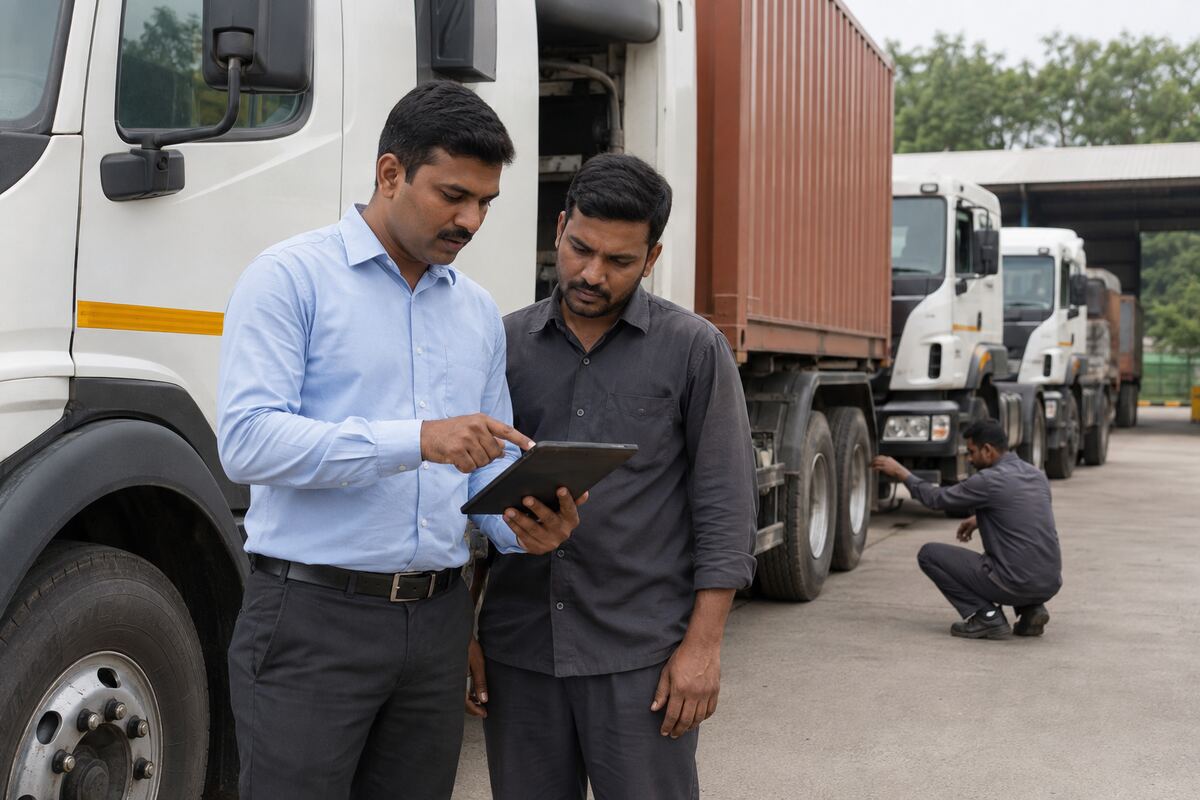
Fleet managers should convert these events into clear coaching inputs. For example, a report may show that a driver regularly records high idle time at one delivery location. Before holding the driver responsible, the manager should check whether the customer keeps trucks waiting at the gate.
This context matters. When drivers see that the company uses data fairly, they become more willing to participate in improvement programmes.
Managers can conduct short weekly discussions using a few relevant examples from recent trips. They should recognise good performance, explain where fuel was wasted and agree on one or two practical improvements for the following week.
Combine Driver Coaching with Fleet Discipline
A skilled driver cannot deliver the best fuel efficiency if the truck has underinflated tyres, delayed servicing or an unsuitable load plan.
Fleet operators should combine eco-driving programmes with:
- Regular tyre-pressure checks
- Preventive engine and filter maintenance
- Correct wheel alignment
- Balanced vehicle loading
- Better route planning
- Reduced empty running
- Realistic dispatch and delivery schedules
Poor planning can force a driver to rush or idle for long periods. Giving drivers achievable schedules makes safe and efficient driving easier.
Build a Short and Repeatable Training Cycle
An effective eco-driving programme does not need weeks of classroom instruction. Fleets can start with a focused training cycle:
- Record a baseline for fuel use, idling and driving events.
- Explain how specific habits affect fuel consumption and safety.
- Conduct supervised driving practice on familiar routes.
- Review individual results every week.
- Provide refresher coaching when performance starts to decline.
Training should include real situations that Indian truck drivers face, such as congested highways, toll queues, steep routes, customer waiting time and varied road conditions.
Supervisors should also invite drivers to share operational problems. A driver may identify a difficult loading point, repeated traffic bottleneck or maintenance issue that data alone cannot explain.
Measure Results That Reflect Real Operations
Kilometres per litre can provide a useful starting point, but it does not account for differences in load weight or route difficulty. Fleets should also track fuel used per tonne-kilometre, which connects fuel consumption with the weight moved and distance travelled.
Other useful measures include:
- Percentage of trip time spent idling
- Number of harsh acceleration and braking events
- Speeding events
- Safety incidents
- Tyre and brake wear
- Preventive maintenance findings
Managers should compare similar vehicle types, loads and routes. A truck operating in city traffic should not receive the same fuel target as one travelling mainly on open highways.
Seasonal conditions also matter. Monsoon traffic, road diversions and extreme heat can affect fuel consumption. Fair comparisons build trust in the programme.
Reward Efficiency Without Compromising Safety
A fuel incentive should never encourage drivers to speed, avoid necessary rest or under-report problems. Fleets need a balanced score that combines fuel efficiency, safe driving, timely delivery and accurate reporting.
Recognition can include certificates, team appreciation, training opportunities or performance incentives. Managers should reward improvement as well as top performance. This gives every driver a realistic reason to participate.
Eco-Driving as a Practical Green Logistics Step
Commercial fleets do not have to wait for complete vehicle replacement to reduce fuel waste. Better driving habits, telematics-based coaching and consistent maintenance can support progress with the vehicles already operating today.
The PTC Green Logistics Division promotes practical steps that connect environmental responsibility with reliable transport operations. By treating drivers as partners and using data fairly, fleets can reduce waste, improve safety and build a more efficient road freight network.