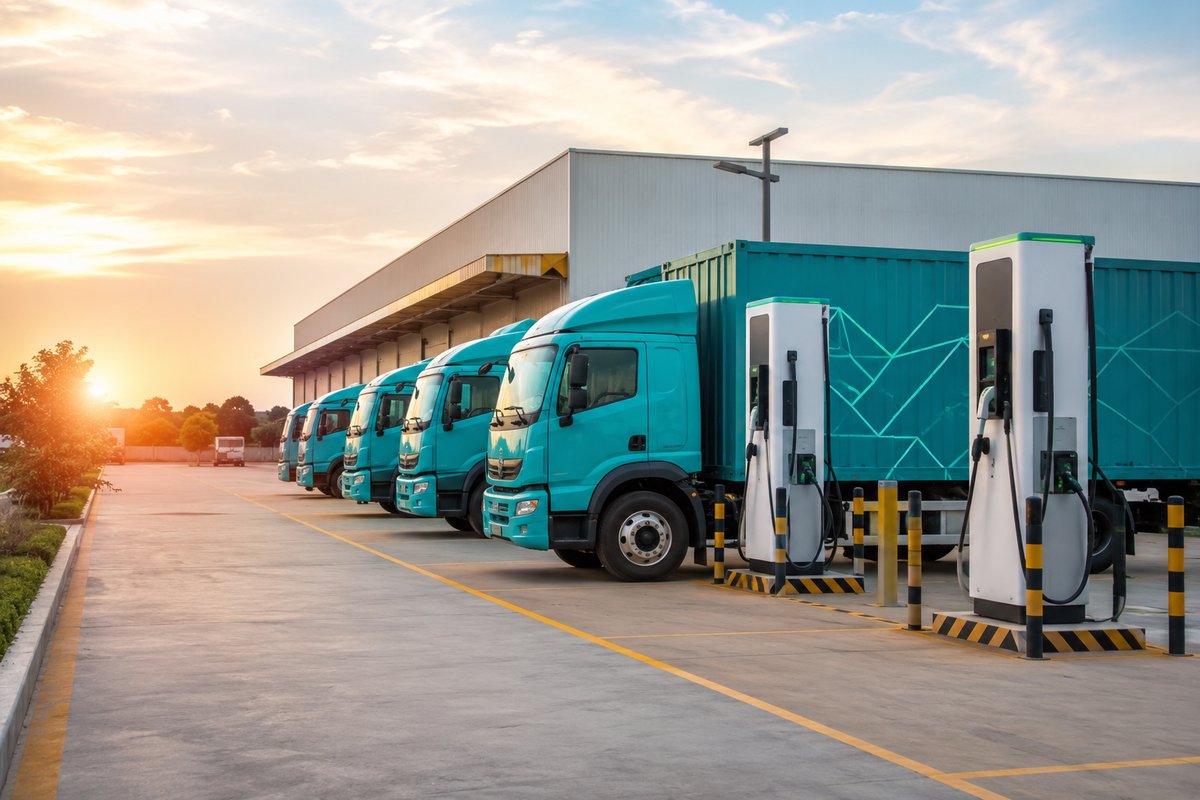
India’s logistics sector has entered a new phase. Government initiatives such as PM E-DRIVE have increased support for electric trucks and charging infrastructure. The question is no longer whether electric trucks will become common. The focus has shifted to how freight operators should prepare their depots.
Building an EV-ready facility involves much more than adding charging points. Operators need to rethink parking layouts, power supply, safety procedures, vehicle schedules and daily yard operations.
EV-Ready Depot Design Basics
A freight depot becomes EV-ready when it supports smooth charging and vehicle movement without disrupting operations.
Think of it like building an airport. A runway alone is not enough. Airports also need taxiways, parking bays, control systems and maintenance areas. Similarly, electric truck depots need a complete ecosystem.
The first requirement is power availability. Fast chargers demand significant electricity. Operators should work with local utilities to understand available capacity and future expansion plans. Some depots may need transformer upgrades or additional electrical connections.
Parking layouts also matter. Charging bays should allow easy access without creating traffic bottlenecks. Drivers should not spend valuable time repositioning vehicles. Clear entry and exit paths improve efficiency.
Many operators also reserve separate areas for vehicle inspections and maintenance. This approach keeps charging activities and repair work organized.
As e-truck charging infrastructure in India expands, well-planned depots will become valuable assets for logistics companies.
Charging Windows for Commercial Fleets
Commercial fleets operate differently from passenger cars. A private car may charge overnight without concern. Freight vehicles follow delivery schedules, driver shifts and customer commitments.
Charging windows must fit into these operating patterns.
For example, a regional distribution fleet that returns to the depot every evening can use overnight charging. Long-haul trucks may require opportunity charging during loading and unloading breaks.
Fleet managers should answer several questions:
- How long does each route take?
- When do vehicles return to the depot?
- Which trucks require fast charging?
- Can loading and charging happen simultaneously?
Vehicle rotation plays an important role. Instead of sending all trucks to chargers at once, operators can stagger charging schedules. This approach reduces peak electricity demand and prevents congestion.
Smart scheduling also affects route planning. Routes with predictable daily mileage often become the best candidates for early electric fleet deployments.
Safety and SOPs in Freight Charging Yards
Safety becomes even more important when dealing with high-voltage systems.
Charging zones should remain clearly marked and separated from heavy equipment traffic. Good lighting and adequate ventilation help create a safer environment.
Every depot should establish simple standard operating procedures. Drivers and yard personnel should know:
- How to connect and disconnect chargers safely.
- How to identify abnormal battery temperatures or warning signals.
- What actions to take during electrical faults.
- How to report incidents immediately.
Emergency response plans are equally important. Staff should receive training for battery-related incidents, even though such events remain uncommon.
Fire extinguishers, emergency isolation switches and designated response areas should remain easily accessible. Regular drills help teams respond confidently during unexpected situations.
Safety preparation creates trust among drivers, customers and fleet owners.
How EV Depots Influence Operations
Electric trucks affect more than charging infrastructure. Depot readiness influences several operational decisions.
Driver shifts may change because charging times become part of vehicle schedules. Yard operations must coordinate loading, parking and charging activities efficiently.
Maintenance planning also evolves. Electric vehicles have fewer moving parts than diesel trucks, but technicians need specialized skills and tools. Depot managers should train teams and establish preventive maintenance routines.
OEM selection also depends on depot capability. Different truck manufacturers offer different battery capacities and charging standards. A well-prepared depot gives fleet operators greater flexibility when evaluating vehicles.
The quality of depot infrastructure also impacts total cost of ownership calculations. Efficient charging and better vehicle utilization improve fleet economics over time.
Pilot-Depot Selection for Logistics Operators
Most companies do not need to electrify every depot immediately. Starting with pilot locations makes more sense.
Shippers and logistics providers should prioritize depots that have:
- Predictable routes.
- High vehicle utilization.
- Reliable electricity supply.
- Adequate parking space.
- Frequent return-to-base operations.
For example, urban distribution hubs serving Bengaluru, Chennai or Hyderabad can become strong candidates because trucks often follow fixed schedules and travel moderate distances.
Pilot depots allow companies to learn gradually. Teams can collect operational data, understand charging behavior and refine processes before expanding to other locations.
Preparing for the Next Stage of Freight Mobility
Electric trucks will become an increasingly important part of India’s transport ecosystem. Building EV-ready depots today gives logistics companies a practical advantage tomorrow.
Success will depend on more than installing chargers. Companies that focus on power planning, charging schedules, safety procedures and operational readiness will create stronger foundations for future growth.
As e-truck charging infrastructure in India continues to evolve, smart depot planning will help fleet operators, shippers and logistics partners transition with confidence.