Why Dispatch Planner Training Matters More Than Ever
In modern logistics, trucks, warehouses, and technology often get the spotlight. But the real difference between an average operation and a high-performing one comes down to the quality of the planner.
A skilled planner works like a conductor of an orchestra. When every route, load, and timeline is aligned, the system flows smoothly. When planning is weak, small mistakes quickly turn into delays, extra costs, and unhappy customers.
In India’s fast-growing logistics sector, investing in training for logistics dispatch planners is no longer optional. It is a direct lever for cost control and service reliability.
How Planner Quality Drives Cost and Reliability
Let’s take a simple example. Imagine two planners handling the same route from Delhi to Mumbai.
- Planner A assigns trucks without checking load combinations. Half the trucks run partially empty.
- Planner B consolidates loads smartly and ensures full utilization.
The result:
- Planner A increases cost per shipment.
- Planner B reduces cost and improves delivery predictability.
This is what we call lane discipline. Good planners stick to defined routes and optimize them over time instead of constantly changing decisions.
Another key factor is capacity smoothing. Instead of sending ten trucks one day and none the next, a trained planner spreads dispatches evenly. This avoids bottlenecks at warehouses and customer docks.
Finally, strong planners reduce exceptions. They anticipate issues such as traffic delays, loading bottlenecks, or vehicle shortages. This reduces last-minute firefighting.
In short, better planning leads to:
- Lower empty kilometers
- Higher truck utilization
- Fewer delays
- Better customer trust
Core Competency Map for Dispatch Planners
A structured training program focuses on building specific, practical skills. At PTC Logistics Skill Academy, the focus is on four core competencies.
1. Load Consolidation Logic
Planners must learn how to combine shipments efficiently.
For example, instead of sending two half-loaded trucks to the same region, a trained planner merges loads into one full truck and reschedules the rest. This reduces fuel cost and improves margins.
2. Route Risk Thinking
Every route has risks such as traffic congestion, weather, or regulatory checks.
A good planner thinks ahead. For instance, during monsoon season, certain highways slow down. A trained planner adjusts routes or buffers time to maintain delivery commitments.
3. Cut-Off and Cycle Time Management
Timing is everything in logistics.
Planners must manage:
- Warehouse cut-off times
- Dispatch windows
- Delivery SLAs
Think of it like catching a flight. If you miss the check-in window, the whole journey gets delayed. Similarly, missing a dispatch cut-off can push deliveries by a full day.
4. Escalation Design
Problems will happen. What matters is how quickly they are handled.
A trained planner sets clear escalation rules. For example:
- If a truck is delayed by more than two hours, notify the customer
- If loading is incomplete by cut-off time, alert the warehouse supervisor
This ensures faster decisions and fewer surprises.
Digital Readiness for Modern Planning
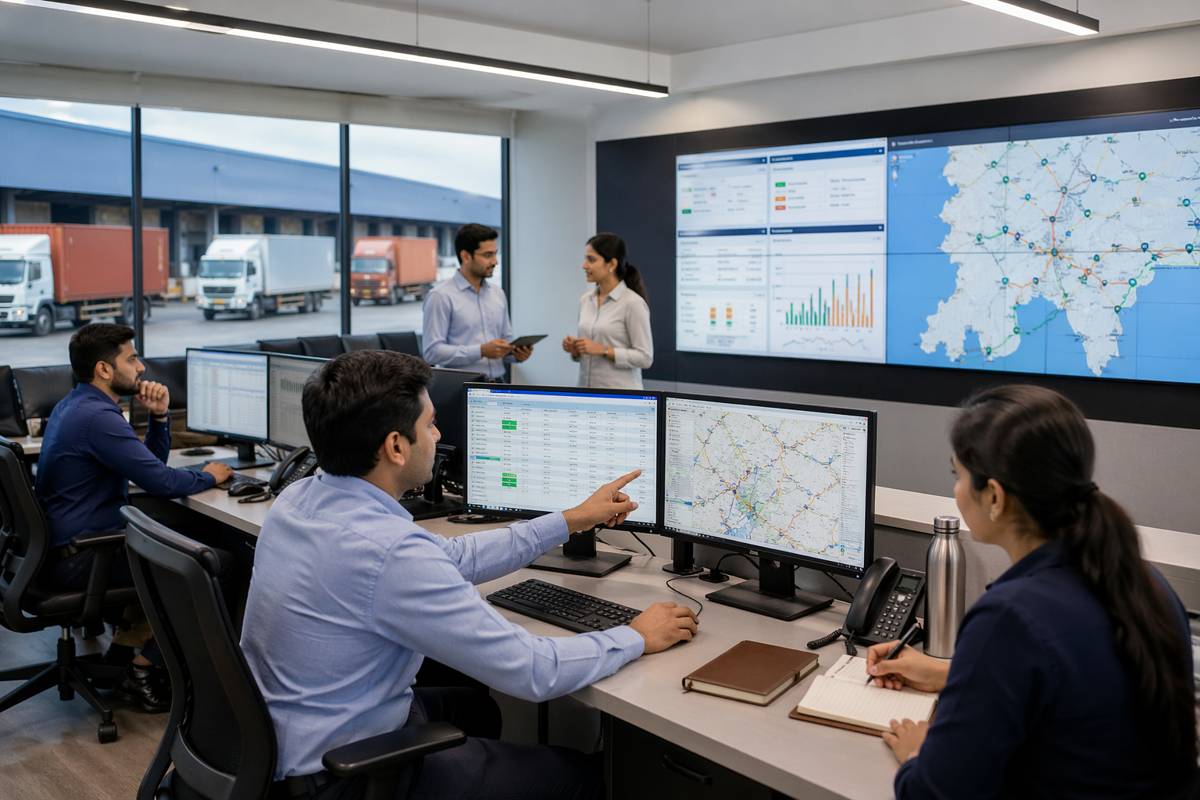
The role of a dispatch planner is evolving. Earlier, planners relied heavily on phone calls and manual updates. Today, leading logistics companies use API-fed milestone data.
This means planners receive real-time updates such as:
- Vehicle arrival at warehouse
- Loading completion
- In-transit location
- Delivery confirmation
Instead of chasing drivers for updates, planners now focus on decision-making.
For example:
- If a delay alert is triggered, the system flags it instantly
- The planner applies a predefined action rule such as rerouting or notifying the customer
This shift from reactive communication to proactive planning is a key part of logistics dispatch planner training in India.
Certification-Style KPIs That Measure Real Performance
Training is only effective if it leads to measurable outcomes. That is why Dispatch Planner Academy focuses on certification-style KPIs.
1. ETA Variance
This measures how close actual delivery time is to the promised time.
Lower variance means better planning accuracy.
2. Empty Kilometer Percentage
This shows how much distance trucks travel without load.
Reducing empty kilometers directly improves profitability.
3. Load Factor Percentage
This measures how fully trucks are utilized.
Higher load factor means better consolidation and cost efficiency.
4. On-Time Departure Percentage
This tracks whether trucks leave the warehouse as scheduled.
Delays at dispatch often create a ripple effect across the supply chain.
5. Exception Closure Time
This measures how quickly issues are resolved.
Faster closure means better coordination and customer satisfaction.
Building the Planner of 2026
The logistics industry in India is moving towards higher speed, higher visibility, and tighter service commitments. In this environment, the dispatch planner is no longer just a coordinator. They are a decision-maker who directly impacts cost, service quality, and customer experience.
A well-designed training program builds planners who:
- Think ahead instead of reacting late
- Use data instead of relying on guesswork
- Manage capacity with discipline
- Handle exceptions with clarity
For companies aiming to scale reliably, investing in logistics dispatch planner training in India is one of the smartest moves they can make.
Final Thoughts
Trucks and technology can be bought. Skilled planners must be developed.
Dispatch Planner training in our Academy bridges this gap by turning everyday planners into high-impact professionals who drive efficiency and reliability across the network.
As logistics becomes more competitive in 2026, the companies that win will be the ones that invest in their people, especially the planners who keep everything moving.