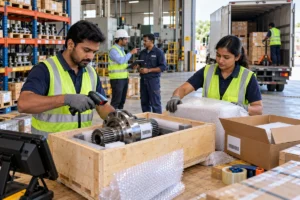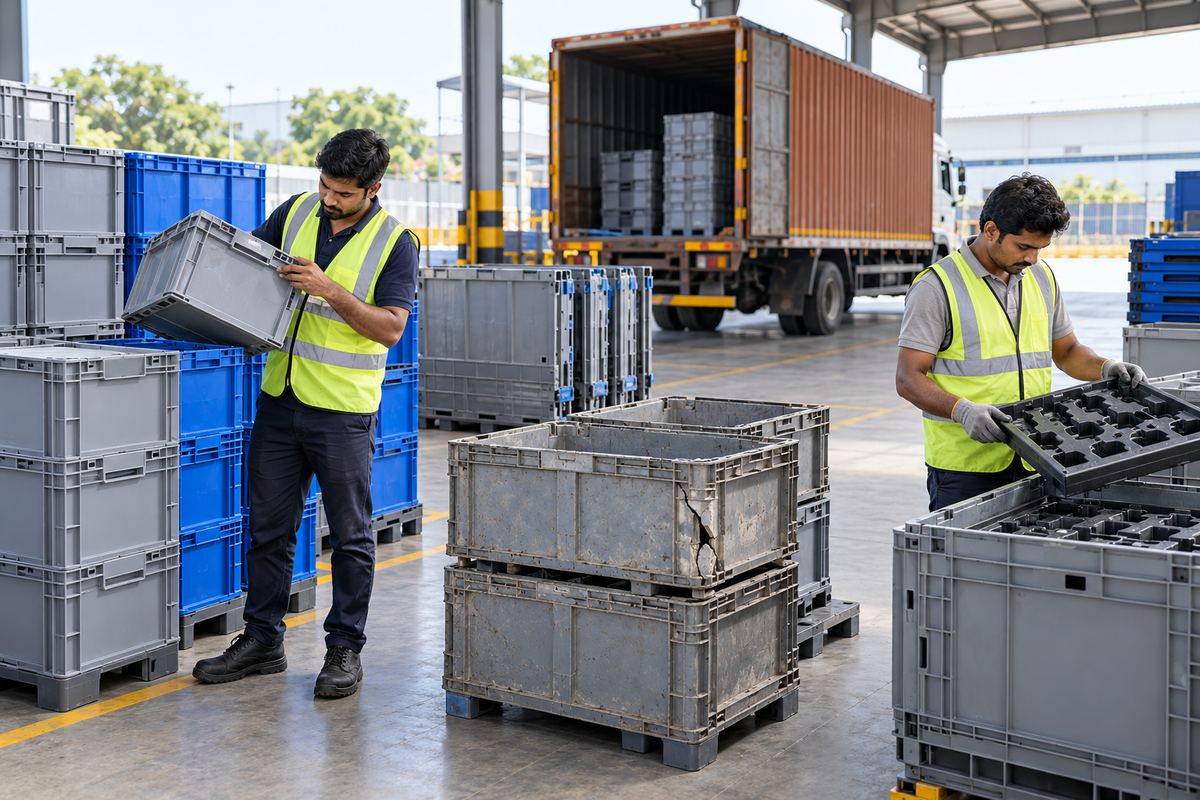
A factory sends components to the same customer every week. Each delivery arrives in fresh packaging, while empty containers accumulate at the receiving plant. Reusable crates may look like an obvious replacement. The harder question is who will bring them back and prepare them for another trip.
A returnable packaging pool is a managed stock of reusable crates, bins or pallets that circulates between agreed locations. A business can manage its own stock or use assets from a pooling provider. Either arrangement needs a clear return process.
For manufacturers exploring returnable packaging logistics in India, start with one repeat route and work through the full cycle before buying packaging in bulk.
Choose a route where returns are practical
Look for regular deliveries between locations that can receive, store and release empty packaging. A predictable customer schedule helps you plan collection. Foldable bins may reduce the space needed for empty returns, provided they suit the product and handling method.
Consider a hypothetical component supplier making weekly deliveries to one assembly plant. If the customer can release empty crates on a fixed day, the supplier can assess collection alongside its transport plan. An occasional shipment to a distant buyer may need a different arrangement.
Allow for packaging in transit, at the customer and under inspection when sizing the pool. Buying only enough units for one outward shipment can leave the next dispatch short while empties come back.
Check product fit before choosing the container. Confirm protection against movement, suitable inserts and safe stacking loads. The Indian Institute of Packaging lists stack-load and drop-testing facilities. Ask a packaging specialist which tests suit your product, container and distribution conditions. iip-in.com
Agree who owns and controls the packaging
Record the owner of each asset and the locations allowed to use it. Agree who arranges collection, pays return freight and handles shortages. If you use a deposit, define when the receiver pays it and what triggers its release or deduction.
Give each reusable unit a durable identification code. Record dispatch, receipt, empty release and return inspection against that code. A shared register can support a small pilot if both locations update it consistently.
Set a return deadline and nominate a contact at each site. Reconcile the number held at the customer with the movement records. Investigate missing units promptly, and apply the agreed process for loss or damage.
Inspect and prepare every returned unit
Separate ready-to-use packaging from dirty units and those awaiting repair. Check cracked walls, damaged hinges, missing inserts and weak bases before issuing a container again. Define who can approve repairs and when a unit must leave service.
Match cleaning to the goods and contamination risks. Packaging that carried oily components may need a different cleaning process from packaging used for clean finished parts. Include drying and inspection time when planning the next dispatch.
Count a completed cycle only when the packaging returns, passes inspection and becomes available for reuse. Otherwise, a successful outward delivery can hide an empty-container shortage.
Compare cost per completed cycle
For an owned pool, total the purchase, replacement, collection, cleaning, repair, storage and tracking costs over the review period. Subtract a realistic remaining asset value, then divide by completed cycles. For hired assets, use the applicable rental and service fees without counting included services twice.
Suppose, purely for illustration, the net cost is ₹85,000 across 1,000 completed cycles. That gives ₹85 per cycle. If equivalent single-use packaging costs ₹110 per shipment, the comparison suggests a ₹25 difference, subject to matching the shipment quantity and protection level.
If the same spend produces only 500 completed cycles, the cost rises to ₹170. Slow returns and lost units can change the result. Use actual records and include loss costs when reviewing whether the arrangement pays.
Run a small pilot before expanding
Choose one customer route and a limited packaging stock. Agree the measurement period, return deadlines and acceptable damage levels before dispatch. Track these measures:
- Share of units due back that return on time.
- Days from dispatch to readiness for reuse.
- Product damage, packaging repairs and missing units.
- Total cost per completed cycle against single-use packaging.
Discuss the return journey with PTC
Share your delivery frequency, packaging type, customer locations and expected empty returns with Prakash Transport Corporation. Explore PTC’s Green Logistics Division and contact the team to discuss the delivery and return movements for your proposed pilot.
Assess environmental results separately using evidence on packaging life, return transport and cleaning. A reusable label alone does not establish a carbon saving.