When a production machine stops, the missing item may be a small bearing, control card or specialised valve. The part might cost far less than the equipment, yet every hour spent waiting for it can delay output, labour and customer orders.
That is why spare parts logistics in India cannot follow regular distribution rules. Demand is irregular, part numbers change and urgent orders may arrive after warehouse hours. The network must keep important parts within reach without spreading slow-moving stock everywhere.
Segment parts by operational consequence
Part value alone does not show how important an item is. A low-cost component can stop an entire line, while an expensive assembly may have a backup unit available.
Classify each part by operational criticality, demand pattern, purchase lead time, repairability and failure consequence. Check whether it has a qualified substitute or comes from a single source.
A practical classification may include:
- Parts that can stop production and require immediate dispatch
- Essential parts that can wait until the next planned transport window
- Routine consumables with regular demand
- High-value or obsolete items that need controlled stocking
- Repairable components that should return through a recovery loop
This classification gives planners a better basis for stocking and service decisions than annual usage alone.
Place stock according to response time
A central warehouse offers tighter control and fewer duplicate holdings, but it may be too far away when a plant needs a part within four hours. Regional warehouses reduce travel time while spreading more stock across the network.
Plant-side storage works well for components linked to severe downtime risk. Technician-held stock can support common field repairs where the technician travels directly to the equipment. Each option has a cost, so the stocking point should match the promised response time.
A rare component with a six-month lead time may belong near the plant even if it has never failed. A common item available locally may remain at a regional hub. The useful question is, “What happens while we wait for it?”
Define the emergency fulfilment process
Urgent spare-parts orders need clear approval and dispatch rules. If every request is marked critical, warehouse teams cannot separate a line-stoppage requirement from a routine replenishment order.
Set service classes with response targets and authorised approvers. The highest priority may require immediate picking, after-hours access and express road or air movement. A lower priority order may travel through the next scheduled vehicle.
State who confirms the requirement, approves premium freight and informs the receiving technician. Keep current contacts for nights, weekends and holidays. An unattended emergency number adds delay when the plant can least afford it.
Prevent the wrong part from reaching the site
Fast delivery has little value if the component does not fit the machine. Spare-parts masters should include the correct part number, description, equipment model, serial-number range and replacement history.
Supersession data needs care. A newer part may require an adapter, software update or different installation step. The warehouse and technician should see this information before dispatch.
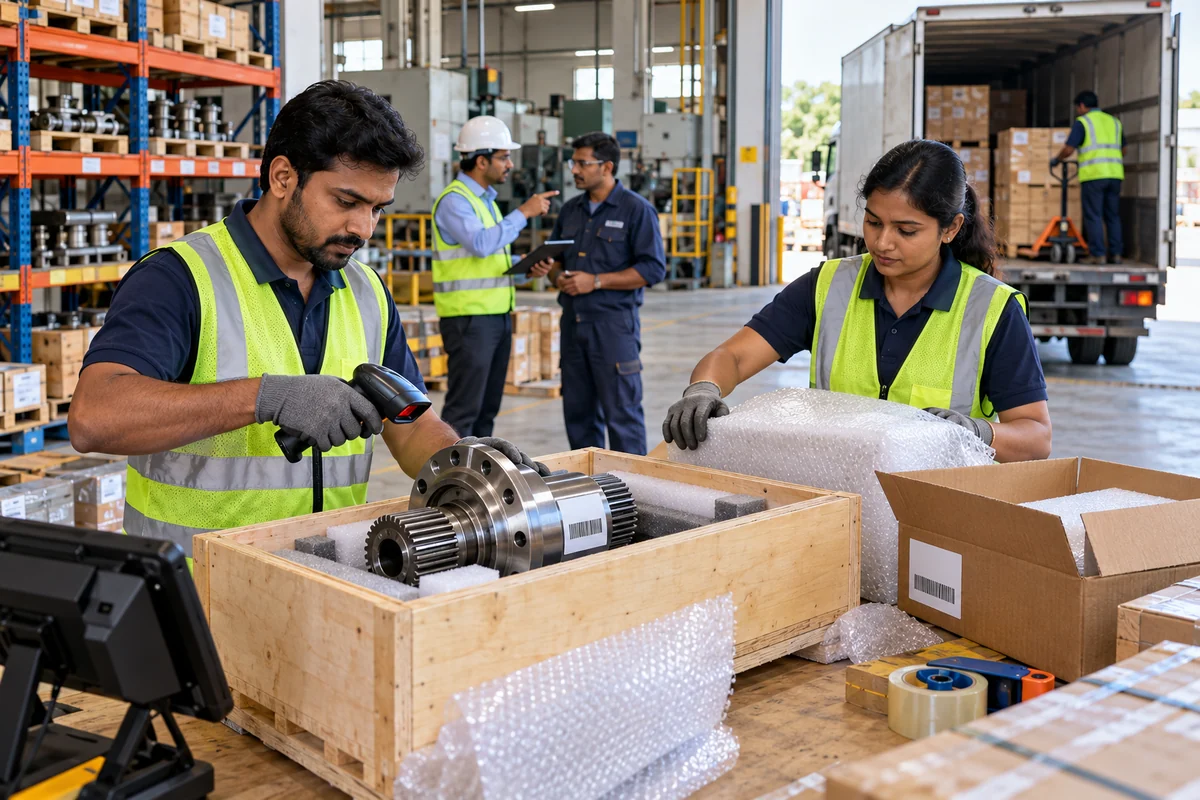
Use barcode scanning or serialisation where it improves accuracy. A final check should match the component with the machine information supplied by the plant. Critical orders may also use a photograph or digital confirmation before dispatch.
Design the return flow with the forward network
Many industrial components can be repaired, refurbished, claimed under warranty or returned as recoverable cores. The reverse movement should be planned when the forward network is designed.
Give the technician simple instructions for tagging, recording and safely packing the removed part. Track whether it is awaiting return, under repair, under warranty review or ready for stock.
Without this loop, recoverable components can sit in plant stores while the company keeps buying new replacements. Clear ownership and turnaround targets help recover both value and availability.
Measure uptime support, not only warehouse activity
Useful measures include part fill rate, response time, first-time fix rate and emergency freight cost. Track obsolescence and the turnaround time for repairable parts as well.
Review failed requests, not only successful dispatches. A low fill rate may point to poor forecasting, an incorrect part master or stock held in the wrong location. A quick delivery followed by a second order may expose a fitment or diagnosis problem.
PTC can support businesses in planning spare-parts storage, verification and time-sensitive transport around their actual uptime needs. The aim is to make the network ready before the breakdown call arrives, so the right component reaches the right site with less delay and fewer costly errors.