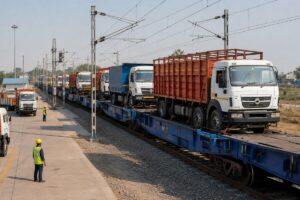
As India’s manufacturing and logistics sectors continue to grow, businesses are rethinking where they store and move inventory. The rise of industrial corridors is creating new opportunities for warehouse expansion beyond traditional metro locations. Companies that choose the right distribution center (DC) locations can reduce transportation costs, improve delivery speed, and strengthen supply chain resilience.
This is where industrial corridor warehousing in India is becoming a strategic advantage.
Why Industrial Corridors Matter for Warehousing
Industrial corridors connect manufacturing zones, ports, highways, rail networks, and consumption centers. They create an ecosystem where goods can move more efficiently between production facilities and customers.
Think of a warehouse network like a city’s water distribution system. If water tanks are located too far from residential areas, supply becomes slower and more expensive. The same principle applies to warehouses. A well-placed DC ensures products reach customers quickly without unnecessary transportation costs.
As industrial activity expands into emerging corridors, warehouse operators have an opportunity to position facilities closer to future demand instead of reacting after congestion and costs increase.
A Practical Framework for Choosing DC Locations
Selecting a warehouse location should go beyond land availability or rental costs. Businesses should evaluate four key factors.
1. Demand Centers
Start by identifying where customers are located today and where demand is expected to grow over the next five years.
For example, an FMCG company serving western and southern India may require different warehouse locations than an automotive supplier serving manufacturing plants in central India.
Map customer density, order volumes, and delivery expectations before making location decisions.
2. Manufacturing Clusters
Warehouses positioned near manufacturing hubs can reduce inbound transportation costs and improve inventory replenishment speed.
When suppliers and production facilities are located nearby, businesses can move goods faster and maintain leaner inventory levels.
Industrial corridors often attract new factories, making them attractive locations for future-ready warehouse investments.
3. Corridor Connectivity
A warehouse’s value depends heavily on how easily trucks can access highways, rail terminals, ports, and multimodal logistics parks.
A facility located near a major transport corridor can often outperform a cheaper warehouse in a poorly connected area.
Evaluate:
- National highway access
- Rail freight connectivity
- Port proximity for export-oriented operations
- Last-mile road infrastructure
Strong connectivity improves both speed and reliability.
4. Service-Time Targets
Every network design should begin with customer expectations.
If customers expect next-day delivery, warehouse locations must support that commitment. If a business can operate with two or three-day delivery windows, it may be able to consolidate inventory into fewer locations.
Service goals should drive warehouse placement, not the other way around.
The Fit-for-Purpose Facility Checklist
Choosing the right city is only part of the equation. The facility itself must support operational efficiency and future growth.
Dock Capacity
Sufficient loading and unloading docks help prevent bottlenecks during peak periods.
A warehouse handling hundreds of truck movements each day requires significantly more dock capacity than a facility serving local distribution.
Yard Depth
Truck parking and maneuvering space are often overlooked during site selection.
Inadequate yard space can create congestion, increase turnaround times, and reduce overall productivity.
A warehouse should comfortably handle expected vehicle traffic, including seasonal demand spikes.
Compliance Readiness
Businesses should ensure facilities meet regulatory and operational requirements from day one.
Key considerations include:
- Fire safety systems
- Environmental compliance
- Security infrastructure
- Worker safety standards
- Insurance requirements
Addressing compliance early prevents costly upgrades later.
Scalability Headroom
Growth rarely follows a straight line.
A warehouse that appears sufficient today may become constrained within a few years.
Look for sites that allow future expansion through additional storage space, increased dock capacity, or adjacent land availability.
Planning for growth now often costs less than relocating later.
What Current Market Trends Are Signaling
Recent market activity continues to show strong demand for Grade A warehousing facilities across India.
Occupiers increasingly prefer modern facilities that offer better operational efficiency, compliance standards, and scalability. Emerging industrial corridors are attracting attention as businesses seek alternatives to saturated metro markets.
Many companies are moving closer to new manufacturing clusters while maintaining access to major transportation networks. This trend is creating growth opportunities in nascent logistics hubs that were previously overlooked.
As infrastructure investments improve road, rail, and multimodal connectivity, corridor-led warehouse development is expected to play an increasingly important role in India’s logistics landscape.
KPIs That Measure Warehouse Network Success
Warehouse expansion decisions should be supported by measurable performance indicators.
Inbound Cost per Pallet
This metric measures the cost of moving inventory from suppliers into the warehouse.
Lower inbound costs often indicate strong proximity to manufacturing clusters and suppliers.
Outbound Kilometers per Order
Track the average distance goods travel from the warehouse to customers.
Reducing outbound distance lowers transportation costs and supports faster deliveries.
Service Coverage Radius
Measure how much customer demand can be reached within defined delivery windows such as same-day, next-day, or 48-hour service.
A wider service coverage radius increases network efficiency and improves customer satisfaction.
Conclusion
Industrial corridor warehousing in India is no longer just a real estate decision. It is a network design strategy that directly impacts cost, service quality, and long-term growth.
Businesses that carefully evaluate demand centers, manufacturing clusters, connectivity, and service expectations can build warehouse networks that remain effective for years to come. By combining the right location with a scalable, compliant, and operationally efficient facility, companies can position themselves to capitalize on India’s next phase of industrial and logistics growth.