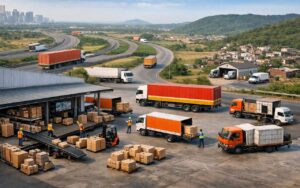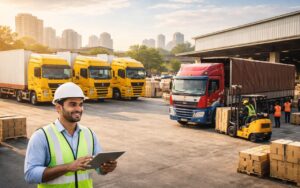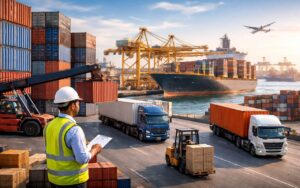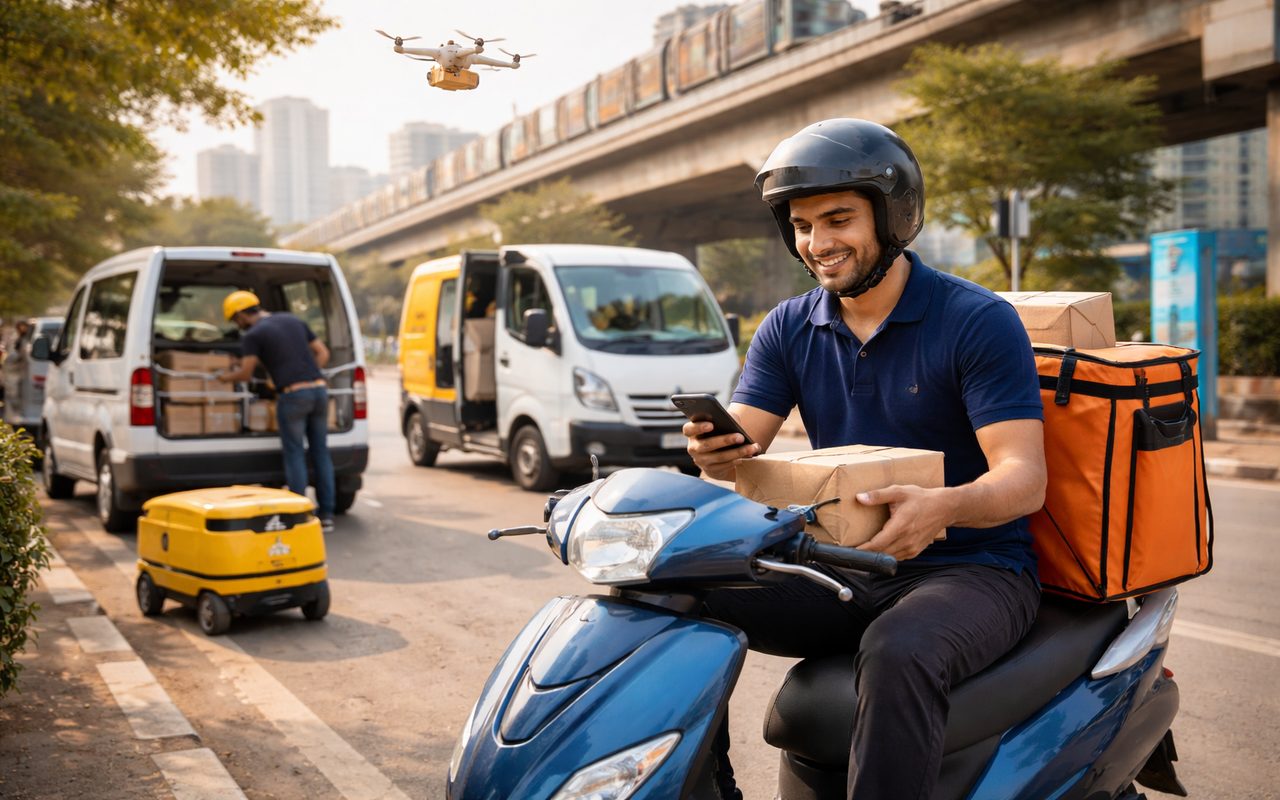
Last-mile delivery plays a decisive role in how customers experience a brand. It is the final step where a shipment moves from a local hub to the customer’s doorstep. In India, this stage often accounts for nearly 30 to 35 percent of total logistics costs. Because it sits so close to the customer, even small delays or inefficiencies feel big. This is why companies across the country now focus strongly on improving last-mile delivery in India and reshaping logistics support around it.
Why the last mile matters so much
Think of the last mile like the final stretch of a relay race. The team may run perfectly for most of the distance, but if the last runner stumbles, the whole effort suffers. In logistics, companies may manage long-haul transport and warehousing efficiently, but delays in the final delivery can raise costs and hurt customer trust.
Indian cities add extra pressure. Traffic congestion, narrow streets, varied delivery addresses, and high customer density all make doorstep delivery complex. At the same time, customers expect faster delivery at lower or no extra cost. To protect margins while meeting these expectations, companies must find smarter ways to manage the final leg.
Technology is changing how deliveries move
Technology now plays a central role in last-mile efficiency. Real-time tracking systems allow logistics teams and customers to see exactly where a parcel is, much like tracking a cab on a ride-hailing app. This transparency reduces anxiety for customers and helps companies respond quickly if something goes wrong.
Route optimization tools powered by AI also make a big difference. Instead of fixed delivery routes, systems analyze traffic, weather, and delivery density to suggest better paths. For example, if a road becomes congested, the system can redirect the delivery agent instantly. This saves fuel, time, and effort across hundreds of deliveries each day.
Some firms also use crowd-sourced delivery models. In this setup, local delivery partners handle nearby orders during specific time windows. It works well in dense urban areas, similar to how food delivery apps rely on a network of local riders to serve customers quickly.
New delivery methods take shape in India
Around the world, companies test drones and autonomous delivery vehicles. In India, these solutions remain mostly experimental due to regulations and infrastructure challenges. However, the country has made strong progress in practical alternatives like bike and electric vehicle based deliveries.
Two-wheelers can move easily through traffic and narrow lanes, making them ideal for short distances. Electric vehicles reduce fuel costs and support sustainability goals, which appeals to both companies and customers. Many e-commerce and grocery platforms already use EV fleets in major cities.
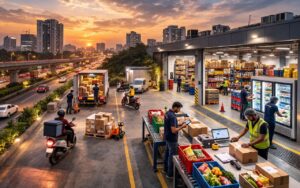
Hyperlocal delivery has further pushed innovation. Ten-minute grocery and essentials apps depend on speed to survive. To make this possible, companies set up micro-fulfillment centers inside city neighborhoods. These small storage points keep popular items close to customers, much like having a mini warehouse in every area. Shorter distances mean faster deliveries and lower costs per order.
Smarter use of existing infrastructure
Innovation does not always mean new technology. Sometimes it means using existing infrastructure in creative ways. A notable pilot project in Mumbai explored using suburban trains to transport parcels during off-peak hours. By placing shipments in luggage compartments, companies moved goods across the city faster while avoiding road traffic.
This approach reduced delivery time and fuel costs, while also easing pressure on urban roads. It shows how logistics support can improve by rethinking how available assets get used.
Many companies now invest in last-mile warehousing hubs near city centers. Combined with gig-economy delivery fleets, these hubs allow flexible scaling during peak demand periods like festivals or sales events. It works much like adding more checkout counters during rush hours in a store.
Redefining logistics support through the last mile
All these changes point to one clear shift. Logistics support no longer focuses only on transport and storage. It now centers on delivering speed, reliability, and visibility at the customer’s door.
Companies that succeed in last-mile delivery in India treat the final leg as a strategic advantage, not just a cost. They use technology to guide decisions, local networks to improve reach, and smart infrastructure to cut waste. The result is lower delivery costs, happier customers, and stronger brand trust.
As Indian cities continue to grow and customer expectations rise, last-mile innovation will remain a key driver of the future logistics landscape. The firms that adapt early will set new standards for how goods move from warehouse to home.