India’s logistics sector is entering a practical phase of fleet decarbonisation. Electric vehicles are no longer just pilot projects or brand statements. For many fleet operators, they are becoming a business decision shaped by route economics, charging access, and long-term fuel savings.
For logistics companies exploring cleaner transport, depot charging is often the smartest place to begin. It gives operators control, reduces uncertainty, and creates a repeatable system that can scale.
If your business is evaluating EV fleet charging infrastructure logistics in India, here is a practical guide to what matters.
Why Depot Charging Is the First Scalable Step
Public charging networks are growing, but logistics operations depend on predictability. A truck delayed because a charger is occupied creates the same kind of disruption as a loading dock delay.
Depot charging solves this.
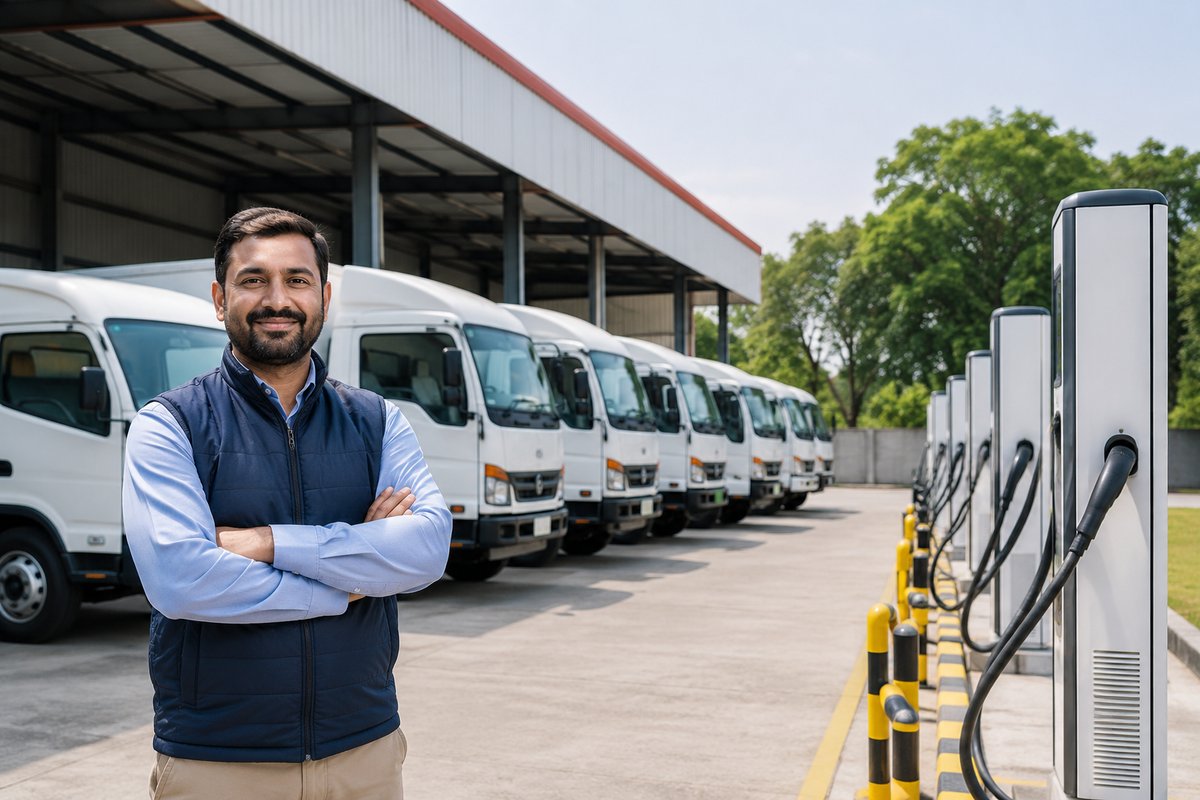
Think of it like owning your own fuel station inside your yard. Vehicles return, park, charge, and prepare for the next trip under your control.
This works well because logistics fleets often run on fixed patterns:
- City delivery vans covering similar routes daily
- Regional trucks returning to the same base
- Dedicated client vehicles with predictable schedules
Depot charging offers three major benefits.
Predictable Charging Cycles
When vehicles return to the same location every evening, charging becomes routine.
For example, a last-mile delivery EV completing 140 km daily can recharge overnight instead of depending on public infrastructure.
This reduces operational uncertainty and simplifies route planning.
Better Use of Parking Time
Every logistics fleet has idle hours.
Instead of vehicles sitting unused, operators can convert that parked time into charging time.
A vehicle parked from 9 PM to 6 AM has nine hours available. That is more than enough for many commercial EV charging needs.
Easier Maintenance Integration
Depot operations already manage inspections, tyre checks, cleaning, and dispatch readiness.
Charging can become another scheduled maintenance activity.
This creates a cleaner operating model instead of adding an unpredictable external dependency.
Is Your Route Suitable for EV Deployment?
Not every route is EV-ready.
The smartest operators filter routes before buying vehicles.
1. Daily Distance
This is the first checkpoint.
If a route consistently stays within practical EV range, the case becomes stronger.
For example:
- 80 to 150 km city delivery route: strong EV fit
- 200 to 300 km regional route: possible depending on vehicle and charging setup
- 600 km interstate haul: currently more difficult without en route fast charging
The question is simple: can the vehicle complete its duty and return comfortably?
2. Payload Requirements
Payload changes battery efficiency.
A heavily loaded truck consumes more energy than a lightly loaded one.
A parcel delivery EV behaves differently from a construction materials carrier.
Operators should match EV deployment with lighter, repeatable payload profiles first.
3. Stop-and-Go Advantage
Urban traffic can actually help EV economics.
Unlike diesel vehicles, EVs recover some energy through regenerative braking.
Think of it like charging a little every time you slow down.
That makes city routes with frequent braking more EV-friendly than uninterrupted highway routes.
4. Turnaround Time
Charging requires planning.
If a vehicle finishes one trip and must leave again within 30 minutes, charging flexibility becomes limited.
But if turnaround time is several hours, depot charging becomes much easier.
Route timing matters as much as distance.
Planning the Right Charger Mix
Buying chargers without a plan creates wasted investment.
The goal is not maximum charging speed everywhere. The goal is matching charger type to fleet behavior.
AC Charging for Overnight Fleets
AC chargers are usually suitable when vehicles stay parked for long periods.
Examples:
- Night charging for city delivery fleets
- Employee shuttle vehicles
- Predictable urban operations
They generally cost less and reduce infrastructure strain.
Think of AC charging like slow cooking. It takes longer but works efficiently when time is available.
DC Fast Charging for High Utilisation Fleets
DC chargers work when turnaround speed matters.
Examples:
- Multi-shift delivery operations
- Time-sensitive regional movements
- Vehicles requiring quick recharge between assignments
They cost more but reduce downtime.
Think of DC charging like an express service lane.
Schedule Chargers Like Dock Slots
A common mistake is assuming chargers will somehow self-organise.
They will not.
Charging must be scheduled like warehouse dock appointments.
Example:
- Vehicle A: 8 PM to 11 PM
- Vehicle B: 11 PM to 2 AM
- Vehicle C: 2 AM to 6 AM
This improves charger utilisation without overbuilding infrastructure.
Managing Peak Energy Costs
Electricity savings are real, but poor planning can increase costs.
If multiple DC chargers run simultaneously during peak tariff periods, electricity bills can spike.
Good depot energy planning includes:
- Staggered charging schedules
- Load balancing
- Off-peak charging preference
- Future solar integration where viable
Think of this like managing water pressure in a building. If everyone turns everything on at once, strain increases.
Smart energy control protects savings.
India’s Green Fleet Momentum Is Growing
The direction is clear.
India is investing across cleaner transport infrastructure, including EV charging expansion and LNG logistics solutions.
This matters because fleet transformation rarely depends on one technology alone.
A practical transition may look like:
- EVs for city and short regional operations
- LNG for longer heavy-haul corridors
- Hybrid network planning during transition years
For logistics leaders, this is less about replacing every diesel asset overnight and more about deploying the right technology where it makes commercial sense.
Final Thoughts
Fleet decarbonisation starts with operational discipline, not hype.
Depot charging works because it gives logistics operators control over timing, maintenance, and energy use.
The best starting point is not asking, “Should we electrify the whole fleet?”
It is asking:
“Which routes can we electrify profitably first?”
That mindset turns sustainability from a branding exercise into a transport strategy.
For businesses evaluating EV fleet charging infrastructure logistics in India, depot-led deployment is often the most practical first move toward cleaner and smarter logistics.