
PTC Logistics Skill Academy
What a Logistics Skill Academy (LSA) do for a Company?
- Bridge the Industry Skills Gap
Identifies the gap between the skills employees currently have and the skills the company needs for its strategic goals (e.g., adopting AI, digital transformation, new product launch). It then develops targeted curricula to close those gaps.
- Talent Pipeline & Succession
Creates structured programs to identify and develop future leaders and specialists from within the company, ensuring a continuous supply of skilled talent for critical roles.
- Promote Continuous Learning
Instills a culture of lifelong learning by providing accessible, often modular and digital, training resources that encourage employees to constantly up-skill and re-skill throughout their career.
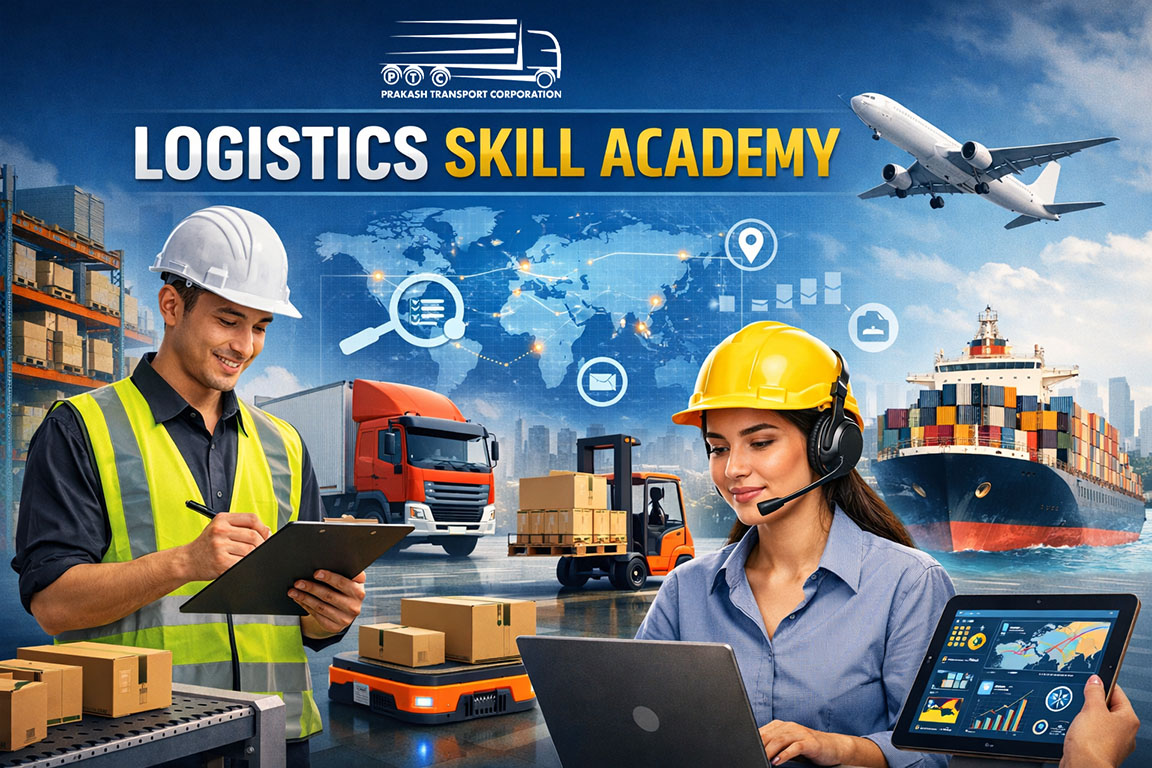
In essence, a company’s Skill Academy is a strategic business unit that transforms L&D (Learning and Development) from a necessary cost into a powerful engine for organizational growth and competitive advantage.
- Develop skills for various job roles in the logistics, warehousing, transportation, and supply chain sectors.
- Offer courses ranging from short-term certifications to diplomas and post-graduate programs.
- Bridge the skill gap between the academic knowledge and the industry’s ever evolving new requirements.
How LSA can make difference to the industry?
Enhancing Operational Efficiency and Productivity
Training equips the workforce with the knowledge to optimize key processes, directly leading to better performance:
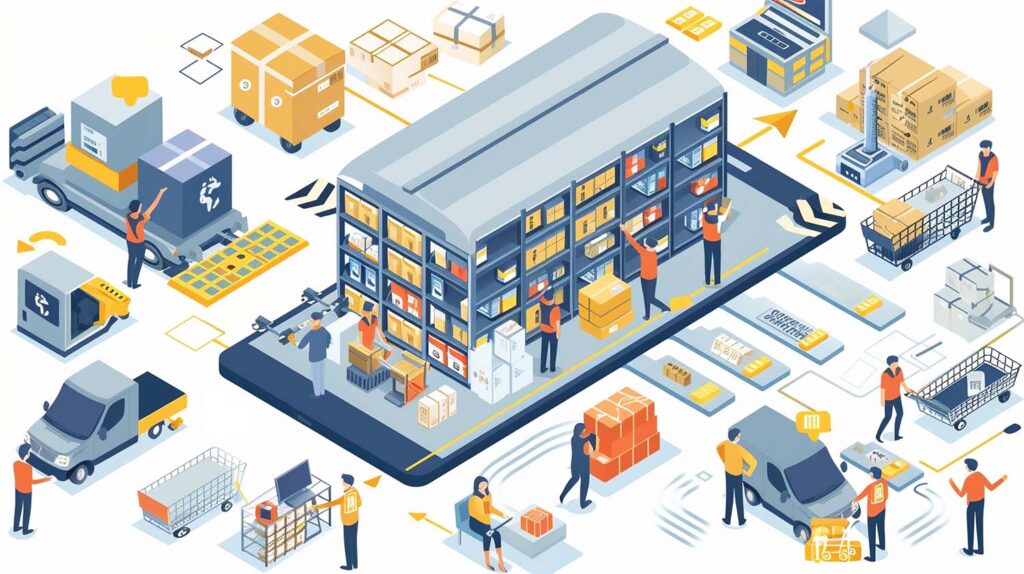
- Process Optimization: Professionals learn best practices for warehouse management, inventory control, and transportation planning, which helps to streamline workflows and reduce operational bottlenecks.
- Reduced Errors and Waste: Skilled staffs are less likely to make mistakes in order fulfilment, inventory recording, and shipping documentation, leading to lower defect rates, less material wastage, and fewer delays.
- Faster Turnaround: Training in areas like lean logistics, pick-and-pack efficiency, and route planning ensures goods move faster from the supplier to the customer.
Driving Cost Reduction and Profitability
Logistics is a significant cost centre, and a skilled team can turn it into a source of competitive advantage:
- Inventory Optimization: Employees are trained in demand forecasting and inventory control techniques (like just-in-time) to prevent both costly stock outs and expensive overstocking, thereby reducing capital tied up in inventory.
- Lower Transportation Costs: Training in Transportation Management Systems (TMS) and route optimization helps reduce fuel consumption, minimizes empty miles, and allows for better negotiation of carrier contracts.
- Risk Mitigation: Skilled professionals can anticipate and manage disruptions (like natural disasters, strikes, or supply shortages) by developing contingency plans, safeguarding the company’s revenue and stability.
Improving Customer Satisfaction and Competitiveness
The quality of logistics is often the final factor that defines the customer experience and satisfaction of services.
- On-Time Delivery: Training emphasizes precision in planning and execution, ensuring products are delivered accurately and on time, which is a major driver of customer loyalty.
- Better Service Quality: Staff become proficient in areas like Reverse Logistics (handling returns and exchanges), providing a smooth and hassle-free experience that enhances the brand’s reputation.
- Competitive Edge: An efficient, cost-effective supply chain allows a company to offer lower prices or faster service than competitors, translating directly into greater market share.
Adapting to Technology and Global Trends
The modern logistics industry is rapidly evolving with technology, and training is crucial for keeping up with fast changing trends:
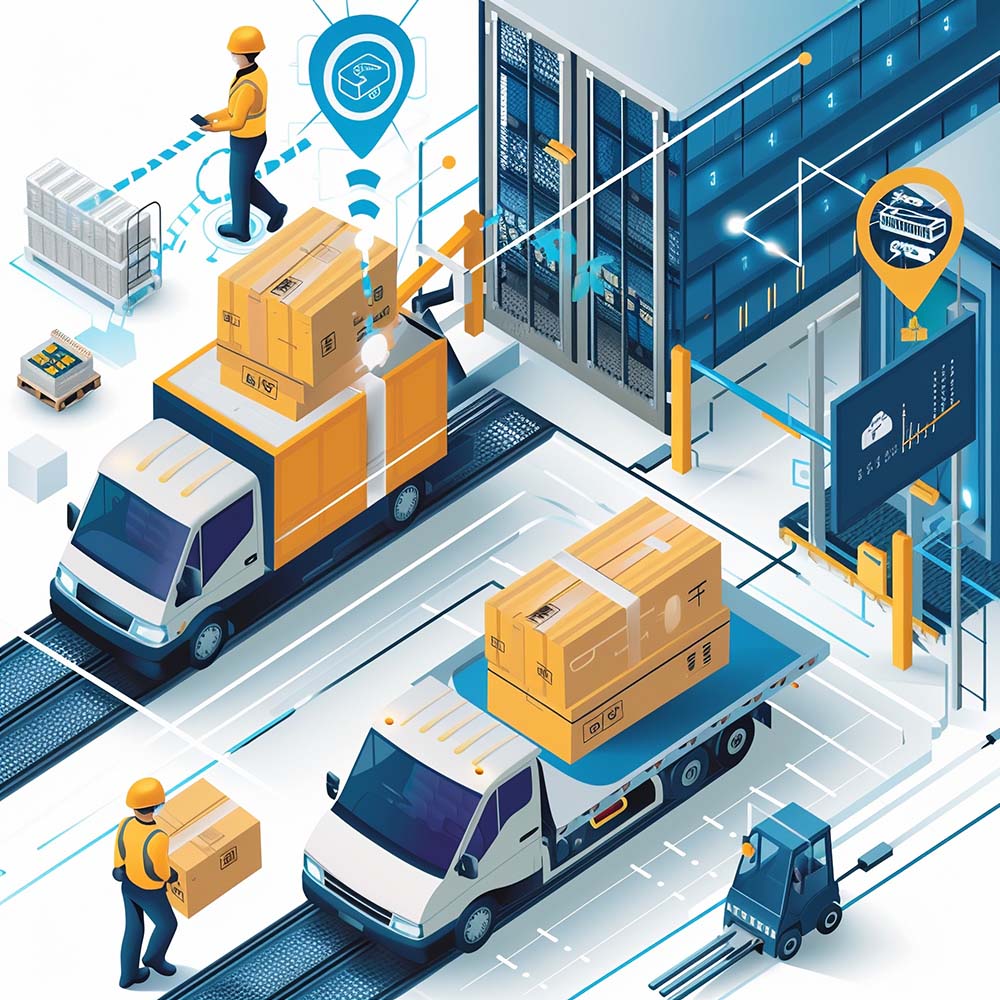
- Technology Proficiency: Training covers the use of modern tools like Warehouse Management Systems (WMS), IoT (Internet of Things) tracking, AI-powered demand forecasting, and automation, making the workforce tech-savvy.
- Global Compliance: Courses on international trade regulations, customs clearance, and cross-border documentation ensure businesses can expand globally without running into legal or compliance issues.
- Sustainability Focus: Professionals learn about Green Logistics practices, such as optimizing routes for lower emissions and implementing sustainable packaging, which helps the industry meet environmental goals and corporate social responsibility (CSR) objectives.
What should be the vision & goals of Logistics Skill Academy?
“To be the premier global centre of excellence for logistics and supply chain education, continually setting industry standards and empowering a future-ready workforce capable of mastering technological transformation, driving global trade, and creating resilient, sustainable supply chains.”
- Future-Proofing the Workforce: The academy will proactively integrate training on emerging technologies like AI (Artificial Intelligence), IoT (Internet of Things) for real-time tracking, Automation/Robotics in warehousing, and Blockchain for supply chain transparency.
- Bridging the Theory-Practice Gap: The curriculum must prioritize hands-on training using industry-standard software (WMS, TMS, ERP systems) and simulated environments (e.g., virtual warehouse management labs, fleet routing exercises). The academy will establish strong partnerships with logistics firms to offer mandatory on-the-job training (OJT), internships, and live case studies.
- Fostering Responsible Logistics Leaders: The academy will integrate modules on Green Logistics, focusing on route optimization for fuel reduction, sustainable packaging, and waste reduction principles (Lean Logistics).
- Cultivating Well-Rounded Professionals: Beyond technical logistics skills (inventory, warehousing, freight), the academy will heavily invest in soft skills training such as communication, negotiation, collaborative leadership, data analysis, and problem-solving.
What is PTC Logistics Skill Academy aims to achieve?
PTC Logistics Skill Academy (LSA) aims to focus on logistics skill training to create a more efficient, resilient, and forward-looking industry, turning logistics from a necessary expense into a strategic asset. PTC’s LSA will design its program and develop courses to achieve the following long term objectives for the company.
- Focusing on Employability: Primarily aim to transition unemployed or underemployed youth, especially those from underprivileged communities, into high-demand, high-growth logistics jobs.
- Certifying the Workforce: Formalize the skills of the largely unorganized logistics workforce (like warehouse workers, truck drivers) through recognized certification aligned with bodies like the Logistics Skill Council in India.
- Digital Technology Skilling: Ensure entry-level workers are competent in basic digital tools and software used in warehousing and transportation management system. Also, up-skilling the workforce on new technologies being implemented by companies.
- PTC is setting the Skill Academy to re-skill and up-skill its employees to meet the high demand of fast changing job requirements.
- PTC is programming to work with all its partners and associates to upgrade their skills in better management of logistics operations.
- PTC is preparing to train all its stakeholders in the ecosystem on effective use of its tech platform for better monitoring and management.
- PTC is planning to work with Logistics Skill Council (LSC) of India in a strategic partnership focused on addressing the skill gaps in the Indian logistics sector.
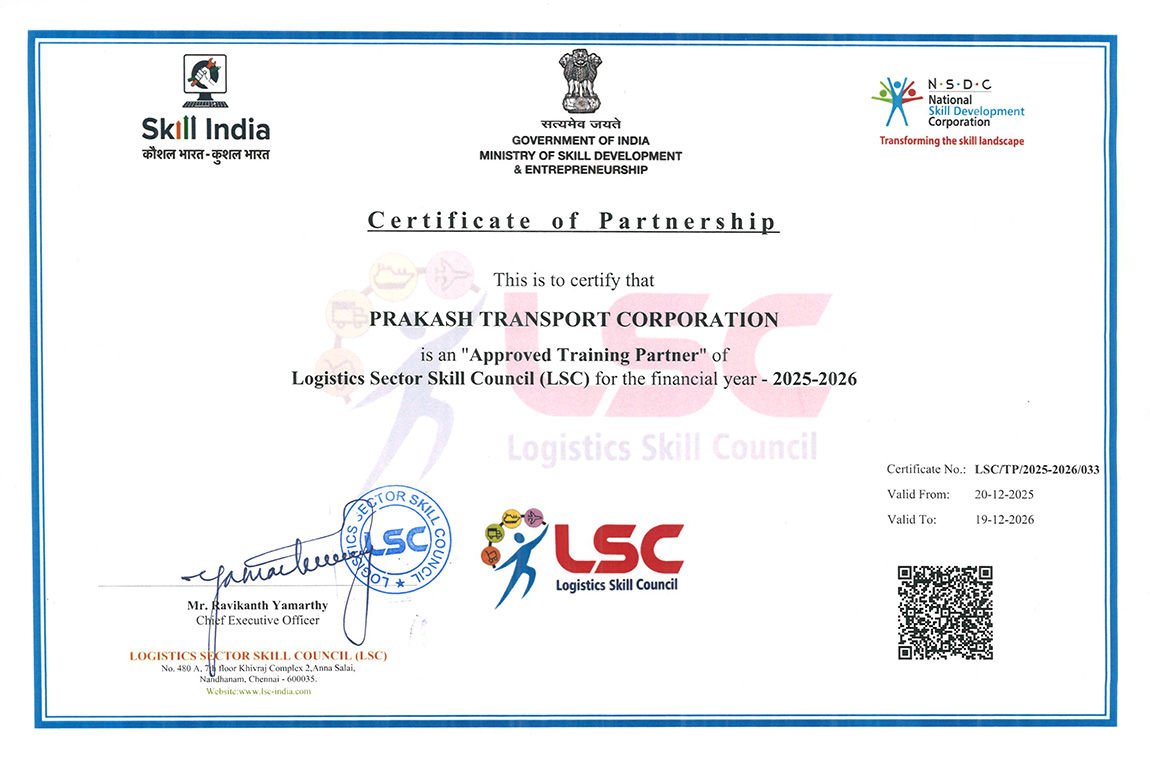
In essence, PTC Logistics Skill Academics shall act as a key industry partner for the Logistics Skill Council (LSC), providing infrastructure support, industry expertise, employment assurance, and standardized, high-quality training aligned with national skill development goals.

