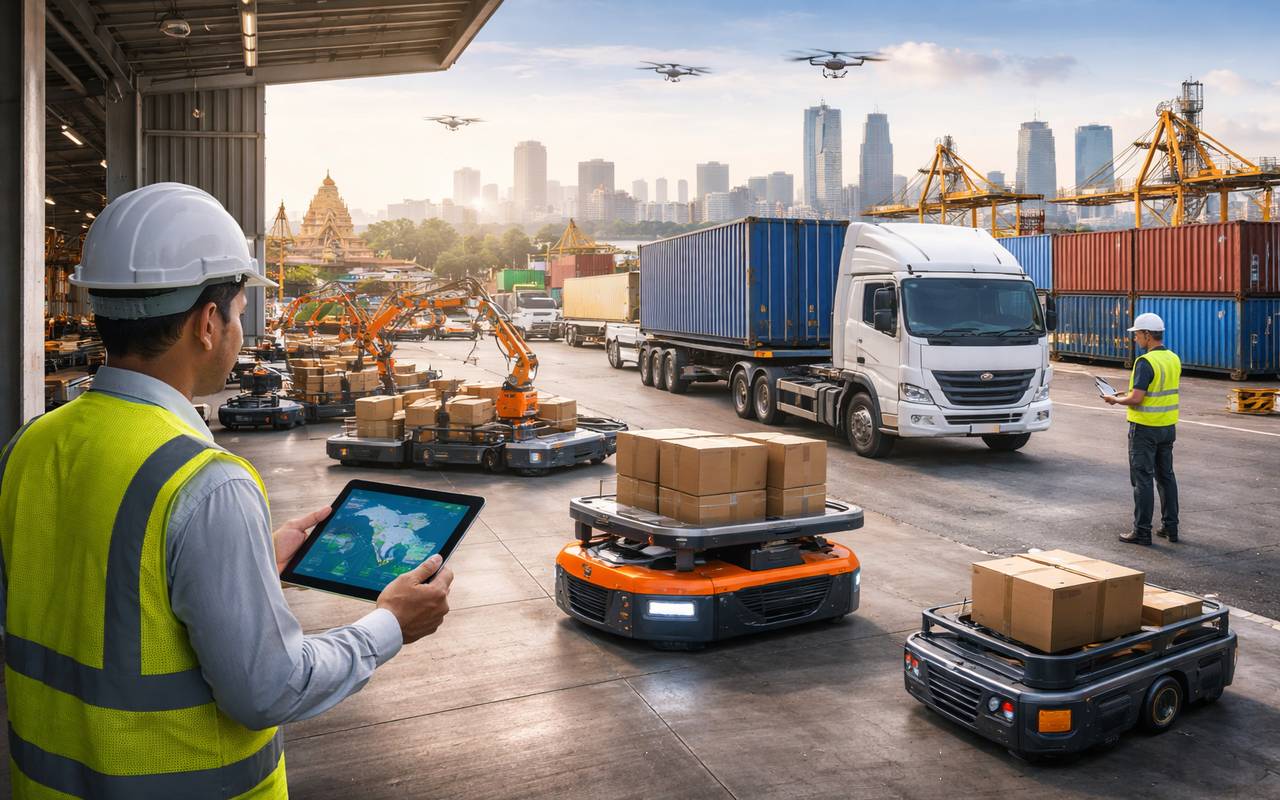
The logistics industry is no longer powered only by trucks, warehouses, and paperwork. Today, technology sits at the center of how goods move across the country. From smarter route planning to real-time shipment tracking, digital tools are reshaping logistics in India. This shift is helping businesses reduce costs, improve delivery timelines, and gain better control over their supply chains.
In this article, we explore how logistics technology in India is evolving through Artificial Intelligence, IoT, automation, digital platforms, and government-backed systems, with simple examples to show how these changes work on the ground.
AI and data analytics are redefining logistics decisions
Artificial Intelligence now helps logistics teams make faster and better decisions. Instead of relying on experience alone, companies use data to predict demand, plan inventory, and select the right transport options.
Think of AI like a smart assistant that learns from past shipments. If demand rises every festive season in a certain city, AI tools can forecast that surge early. This allows companies to position trucks and inventory in advance, rather than reacting at the last minute.
In India, investment in AI-driven logistics tools is growing rapidly, with the market projected to reach $3.28 billion by 2030 at a strong growth rate. Machine learning models already help logistics firms decide which carrier to use, how much stock to hold, and when to move goods. These tools reduce guesswork and bring consistency to daily operations.
Real-time visibility through IoT builds trust and control
The Internet of Things has made live tracking a reality across logistics networks. GPS devices and sensors installed in trucks and containers send constant updates on location, speed, and cargo conditions.
For example, a refrigerated truck carrying medicines can alert the control team if the temperature crosses a safe limit. A delay due to traffic can trigger a reroute before it affects delivery timelines. This visibility improves service and prevents small issues from turning into costly failures.
In India, platforms like the Unified Logistics Interface Platform connect data from roads, railways, ports, and warehouses. This allows businesses to track shipments from origin to destination in one view. Customers benefit too, as they can follow their goods just like tracking a food delivery on a mobile app.
Automation and robotics improve warehouse speed and accuracy
Warehouses play a key role in logistics efficiency, and automation is transforming how they operate. Instead of manual sorting and picking, many facilities now use conveyor systems, robotic arms, and automated storage units.
Imagine a large warehouse where robots bring shelves to human workers instead of workers walking long distances. This setup saves time and reduces errors. Drones also help teams scan inventory in large warehouses within minutes, a task that once took days.
In India, warehouse automation is growing steadily, especially in e-commerce and third-party logistics centers. These tools help meet tight delivery timelines while maintaining accuracy, even during peak demand periods.
Digital freight platforms connect trucks and loads faster
India’s trucking market has long suffered from fragmentation, with many trucks returning empty after deliveries. Digital freight platforms are solving this problem by matching available trucks with nearby loads in real time.
These platforms work much like ride-hailing apps. A shipper posts a load, and the system finds the best available truck based on location, price, and delivery needs. This reduces waiting time and cuts fuel waste.
Some platforms use machine learning to set dynamic pricing and recommend reliable transporters. This shift replaces phone calls and paperwork with faster, transparent processes. Blockchain technology is also under testing to secure documents and reduce fraud, especially in cross-border and high-value shipments.
AI-driven transport optimization saves time and fuel
Route planning has become smarter with AI tools that factor in live traffic, weather conditions, and fuel costs. Instead of following fixed routes, drivers receive real-time guidance to avoid delays.
For instance, during heavy rains or road closures, AI systems suggest alternate routes instantly. Studies show that such optimization can reduce logistics costs by around 15 percent and significantly cut delivery times.
Predictive analytics also help fleet owners plan vehicle maintenance before breakdowns occur. Backhaul planning tools suggest return loads so trucks do not travel empty, improving overall profitability.
Government push accelerates digital adoption
The Indian government plays a key role in driving logistics digitization. The National Logistics Policy focuses on reducing logistics costs, which currently stand at around 13 to 14 percent of GDP.
Government-backed platforms such as ULIP and the Logistics Data Bank support digital integration across the supply chain. Paper documents now give way to electronic proof of delivery, digital invoices, and integrated ERP systems.
When combined with private sector innovation, these initiatives create a strong digital backbone for logistics. For businesses and logistics professionals, this means better visibility, fewer delays, and more reliable operations.
The road ahead for logistics technology in India
Digital transformation in logistics is no longer optional. AI, IoT, automation, and platforms now shape how goods move efficiently across India. These technologies bring clarity, speed, and resilience to supply chains.
As adoption grows, logistics companies that invest in the right technology will gain a clear advantage. For B2B clients, this transformation promises predictable deliveries, lower costs, and greater confidence in their logistics partners. The future of logistics in India is digital, connected, and driven by smart platforms.