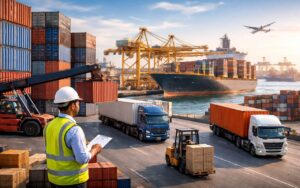
From January 2026, the European Union’s Carbon Border Adjustment Mechanism enters its definitive phase. During the transition period, exporters mainly focused on reporting emissions. From 2026 onwards, carbon reporting becomes directly linked to financial liability. This change makes CBAM compliance for Indian exporters in 2026 a real operational priority, not just a sustainability conversation.
If you export steel, aluminium, cement, fertilisers, electricity, or hydrogen to Europe, carbon data will affect your landed cost, documentation flow, and even customer relationships. Logistics partners now play a bigger role in helping exporters stay compliant and competitive.
What Changed in January 2026
During the transition phase, exporters reported embedded emissions without paying the carbon price adjustment. From January 2026, importers in the EU must purchase CBAM certificates that reflect the carbon intensity of imported goods.
Think of it like customs duty linked to carbon content. If your product carries higher emissions, your EU buyer pays more. Naturally, they will start asking tougher questions about your carbon footprint and your logistics choices.
This shift makes carbon reporting more urgent for EU-linked supply chains. Exporters must move from annual sustainability reports to shipment-level data readiness. Delays or inaccurate data can slow customs clearance or increase compliance risk.
Where Logistics Contributes to Carbon Data
Many exporters assume CBAM only concerns manufacturing emissions. In reality, logistics activities influence total carbon intensity and the credibility of your data.
Here is where logistics matters:
Transport emissions
Road, rail, sea, and air each have different emission profiles. For example, air freight emits significantly more carbon per tonne-kilometre than ocean freight. If you shift urgent shipments to air without tracking emissions, your carbon intensity increases sharply.
Warehousing energy use
Warehouses consume electricity for lighting, equipment, and temperature control. If your logistics partner uses energy-efficient systems or renewable power, your overall carbon profile improves.
Multimodal choices
A well-planned multimodal route can lower emissions. For example, using rail for long inland legs instead of only trucks reduces fuel use. Good logistics planning can balance transit time and sustainability.
Packaging decisions
Over-packaging increases weight and space usage. That means more fuel per shipment. Smart packaging reduces material use and improves load efficiency.
Embedded emissions conversations
Shippers now ask logistics partners for emissions data per shipment or lane. If your partner cannot provide structured data, you face reporting gaps. Think of it like GST reconciliation. Without clean records, compliance becomes stressful.
Practical Carbon Data Checklist for Exporters
To prepare for CBAM compliance for Indian exporters in 2026, exporters should treat carbon data like financial data. It must be accurate, traceable, and ready for audit.
Here is a practical checklist:
1. Shipment-level traceability
Track emissions per shipment, not just annual averages. Maintain records of weight, distance, transport mode, and fuel assumptions.
2. Lane-level emission factors
Understand emissions for specific routes. For example, Mumbai to Rotterdam by sea differs from Chennai to Hamburg. Lane-based factors improve reporting accuracy.
3. Documentation discipline
Keep bills of lading, transport contracts, and energy consumption records organised. Treat them like tax documents. If auditors ask for evidence, you should retrieve it quickly.
4. Audit readiness principles
Use consistent calculation methods. Avoid changing emission factors randomly. Maintain a clear trail that explains how you calculated numbers.
When exporters and logistics partners align on these basics, compliance becomes manageable instead of reactive.
Reducing Carbon Intensity Without Hurting Service
Many exporters worry that lowering emissions will slow deliveries or increase cost. In reality, smart planning can reduce carbon intensity and maintain service levels.
Consolidation
Combine smaller shipments into fuller loads. A fully loaded truck emits less per unit of cargo than a half-empty one. This approach lowers cost and carbon together.
Routing discipline
Avoid last-minute route changes unless necessary. Predictable planning reduces empty runs and fuel waste.
Loading optimisation
Improve pallet configuration and container stuffing. Better space utilisation means fewer shipments for the same volume.
Modal shift where feasible
Switching part of the journey from road to rail or coastal shipping can reduce emissions. This option works best when lead times allow flexibility.
Think of carbon reduction like fuel efficiency in a car. Smooth driving and route planning reduce fuel use without slowing the journey.
Sustainability Metrics as Performance Indicators
Sustainability is moving from a marketing slide to a performance metric. European buyers increasingly include carbon data in supplier scorecards. They compare not only price and delivery performance but also emissions intensity.
In India, the ecosystem is also evolving. Companies are adopting sustainability reporting frameworks. Industry associations and logistics providers are investing in carbon measurement tools. This shift signals that carbon data will soon sit alongside on-time delivery and freight cost in performance reviews.
For exporters, this means logistics partners must provide more than trucks and warehouses. They must provide reliable data, transparent processes, and improvement roadmaps.
The Way Forward
CBAM compliance for Indian exporters in 2026 requires early preparation. Carbon reporting now affects financial exposure, customer trust, and long-term competitiveness in Europe.
Exporters should ask logistics partners clear questions:
- Can you provide shipment-level emissions data?
- Do you track lane-based emission factors?
- How do you ensure audit readiness?
- What steps do you take to reduce carbon intensity without affecting service?
By treating carbon data as a core operational metric, not a side project, Indian exporters can turn compliance into an advantage. Those who prepare early will not only meet EU requirements but also strengthen their position in a market that increasingly values transparency and responsibility.