The logistics industry keeps global trade moving, yet many countries now face a serious skills gap. Warehouses are becoming smarter, fleets are turning digital, and supply chains rely more on data than ever before. At the same time, companies struggle to find people who can operate new systems, analyze information, and manage safety in automated environments. Building human capital is no longer optional. It is the foundation of resilient and future-ready supply chains.
The global logistics skills gap
Logistics once depended mainly on physical strength, manual coordination, and experience learned on the job. Today, the sector needs a broader mix of skills. Workers must understand software dashboards, follow digital safety protocols, and make decisions using real-time data. Many existing employees did not train for these roles, while new entrants often lack practical exposure. This mismatch creates delays, higher costs, and safety risks.
Countries that recognize this challenge early invest in structured workforce development. Two strong examples come from Asia and Europe.
What Singapore and Germany get right
Singapore has built a national logistics skills framework that maps clear career paths. A warehouse assistant can see how to grow into a supervisor, planner, or operations manager through defined training modules. This approach works like a road map. When people know where they can go next, they stay motivated and committed. Training stays practical and closely aligned with industry needs.
Germany follows a similar philosophy through its Freight Transport and Logistics Action Plan. Germany relies heavily on apprenticeships that combine classroom learning with real work experience. A young trainee might spend part of the week learning transport regulations and digital tools, and the rest working alongside experienced professionals. This model builds confidence and job readiness while reducing the gap between education and employment.
Both systems share a simple idea. Skills development works best when governments, companies, and training institutes plan together instead of working in isolation.
Job redesign in the age of automation
Automation does not remove jobs. It changes them. Consider a modern warehouse with automated conveyors and sorting systems. Earlier, a worker focused on lifting and moving goods. Now, that same role may involve monitoring machines, ensuring safety compliance, and responding to alerts on a screen.
Think of it like driving a car with advanced features. The driver no longer adjusts everything manually but still remains responsible for safety and decisions. In logistics, workers move from pure execution to oversight and analysis. This shift creates demand for skills such as basic data interpretation, system troubleshooting, and risk management.
Companies that redesign jobs thoughtfully help employees transition instead of feeling left behind. Short training programs, clear role definitions, and hands-on practice make automation less intimidating and more empowering.
Emerging careers in logistics
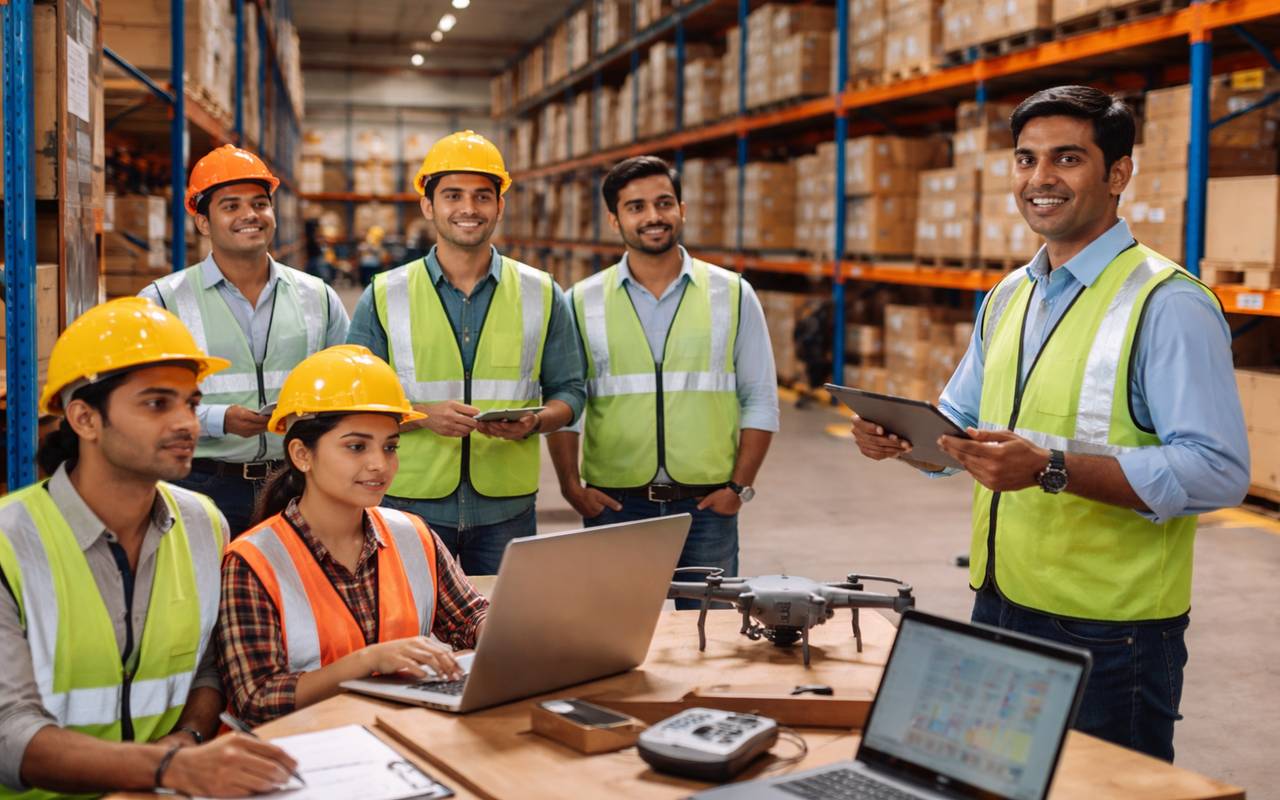
As supply chains become digital, new roles appear. Logistics data analysts turn shipment and inventory data into insights that reduce delays and costs. Drone operators support inventory checks, yard management, and last-mile delivery trials. Safety and compliance specialists ensure that automated systems meet regulations and protect workers.
These roles may sound advanced, but they build on existing logistics knowledge. A dispatcher who understands routes can learn data tools. A warehouse supervisor can train in safety analytics. With the right support, today’s workforce can fill tomorrow’s roles.
The power of collaboration and lifelong learning
No single organization can solve the skills challenge alone. Governments set policy and standards. Industry defines real-world requirements. Training institutes translate those needs into practical courses. When all three collaborate, skills programs stay relevant and effective.
Equally important is lifelong learning. Logistics changes too quickly for one-time education to last a full career. Short refresher courses, micro-credentials, and on-the-job training help workers adapt continuously. Learning becomes a habit, not a phase.
PTC’s commitment to workforce development
At Prakash Transport Corporation, people remain at the heart of operations. This belief drives the launch of the PTC Logistics Skill Academy. The academy focuses on practical training, clear career progression, and future-ready skills that match industry realities.
Through structured programs, employees gain exposure to modern logistics tools, safety practices, and data-driven decision making. Young entrants receive guidance and hands-on learning, while experienced staff reskill for evolving roles. The academy reflects the same principles seen in leading global examples, adapted to India’s logistics landscape.
By investing in human capital, PTC strengthens not only its workforce but also the reliability and quality of its services. Skilled people build stronger supply chains, earn customer trust, and support long-term growth.
Looking ahead
The future of logistics depends as much on people as on technology. Automation, analytics, and new delivery models succeed only when trained professionals guide them. By learning from global best practices, redesigning jobs, and committing to continuous learning, the logistics sector can close the skills gap.
Building human capital today ensures that tomorrow’s supply chains stay efficient, safe, and resilient.