
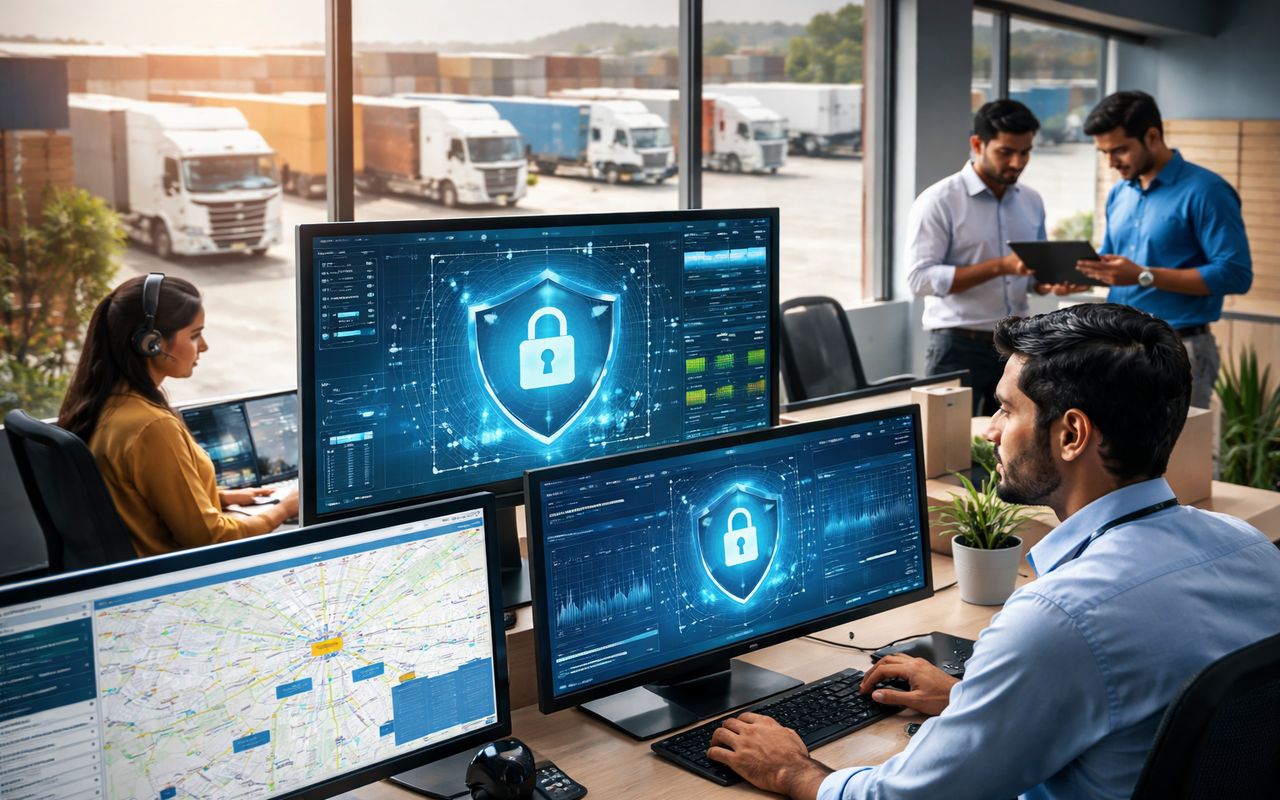
In 2026, logistics runs on data as much as it runs on trucks. Every shipment update, driver allocation, invoice, and customer login flows through digital systems. That is why logistics cybersecurity in India has become a board-level topic, not just an IT checklist.
If a truck breaks down, you can send a replacement. If your tracking system goes down or your data gets locked, the entire supply chain slows. Let us understand why logistics is a target and how companies can protect themselves and their customers.
Why Logistics Is a Prime Target in 2026
Logistics companies sit at the center of multiple digital connections.
Connected fleets use GPS devices and telematics to track vehicles in real time.
Customer portals allow clients to log in and check shipment status.
TMS platforms manage dispatch, routing, billing, and proof of delivery.
Vendors and subcontractors connect through APIs and shared dashboards.
This creates what experts call OT and IT convergence. In simple words, physical operations like trucks and warehouses now depend on software systems. If someone disrupts the software, they indirectly disrupt the physical movement of goods.
Think of logistics like an airport. Planes, ground staff, booking systems, and security all work together. If the digital departure board shows the wrong information, chaos follows even if the planes are ready. The same logic applies to transport management systems and tracking platforms.
Criminals target logistics because it combines valuable data, time-sensitive operations, and multiple external connections. When shipments are urgent, companies feel pressure to restore systems quickly, which makes them vulnerable to ransom demands.
Cybersecurity 2.0 for Logistics
In 2026, basic firewalls and antivirus tools are not enough. Logistics needs what we can call Cybersecurity 2.0.
This approach combines three layers:
- Prevention
- Autonomous detection
- Rapid response
Prevention
Prevention includes strong passwords, multi-factor authentication, network segmentation, and regular updates. It is like locking your warehouse gates and checking ID cards before entry.
Autonomous Detection
Modern systems use AI to detect unusual activity. For example, if a dispatcher account suddenly logs in from another country at midnight and changes route data, the system should flag it instantly.
AI in logistics cybersecurity India works like a night security guard who never sleeps. It watches patterns in logins, data transfers, and route changes. When something looks abnormal, it alerts the team automatically.
Rapid Response
Even the best prevention can fail. That is why response speed matters. If ransomware hits, you must isolate affected systems quickly, switch to backup processes, and restore clean data without paying criminals.
Cybersecurity 2.0 does not mean more complexity. It means smarter protection that matches the speed of logistics operations.
Common Attack Scenarios to Plan For
Logistics companies should prepare for specific risks rather than general threats.
Ransomware
Attackers encrypt systems and demand payment. If your TMS goes offline, dispatch stops. Companies must maintain clean, tested backups to recover quickly.
Credential Theft
A phishing email tricks an employee into sharing login details. Criminals then access customer data or change shipment instructions. This is like someone stealing a master key to your warehouse.
Fake Status Updates
Hackers may alter tracking data to show a shipment as delivered when it is not. This damages trust and creates billing disputes.
Data Tampering
If route data or invoices get modified, it can cause financial loss and compliance issues.
Disruption of Tracking or Dispatch
Even without stealing data, attackers may overload systems to block access. When customers cannot see shipment status, confidence drops immediately.
Planning for these scenarios means running drills. Just as you practice fire evacuation, you should simulate cyber incidents and test how teams respond.
Operational Safeguards That Work
Strong cybersecurity does not require complicated language. It requires discipline.
Access Control
Give employees access only to the systems they need. A billing executive does not need control over dispatch routing.
Multi-Factor Authentication
Make MFA mandatory for all critical systems. A password alone is no longer enough.
Network Segmentation
Separate tracking systems, billing platforms, and internal email networks. If one area is compromised, the damage stays limited.
Vendor Risk Checks
Logistics relies on technology vendors and fleet partners. Evaluate their security standards before integration. A weak vendor can become your weakest link.
Immutable Logging
Store activity logs in a way that cannot be altered. This creates a reliable audit trail if something goes wrong.
Incident Playbooks
Write clear step-by-step response plans. Define who informs customers, who isolates systems, and who contacts legal or regulatory authorities.
Security works best when everyone understands their role, from drivers to senior management.
What B2B Customers Should Ask a Logistics Partner
In 2026, customers should not only ask about fleet size and service coverage. They should ask about security.
Key questions include:
- Do you enforce multi-factor authentication across your visibility platform?
- Can you provide audit trails for tracking updates?
- What are your security SLAs in case of system downtime?
- How often do you test backups and recovery processes?
- Do you conduct third-party security audits?
Business continuity assurance is especially important for real-time visibility platforms. If customers depend on your dashboard to plan production or distribution, downtime affects their operations directly.
The Road Ahead for Logistics Cybersecurity in India
Digital logistics will only grow. AI-powered routing, predictive maintenance, and automated warehouses will increase efficiency but also expand risk.
Companies that treat cybersecurity as part of operational reliability will win trust. Just as you invest in vehicle maintenance to prevent breakdowns, you must invest in digital protection to prevent system failures.
In 2026, logistics cybersecurity in India is not just about protecting data. It is about protecting reputation, customer confidence, and the uninterrupted movement of goods.










One Response
Really timely topic — with Transport Management Systems (TMS) and real-time tracking now central to logistics operations, ensuring data protection and cybersecurity is becoming just as critical as efficient routing and delivery. It’s great to see the focus on safeguarding sensitive fleet, customer, and operational data against breaches and regulatory risks like India’s Digital Personal Data Protection Act (DPDP), which now applies to logistics tracking and telematics systems. A useful read for logistics and supply chain professionals navigating both technology and compliance in 2026!