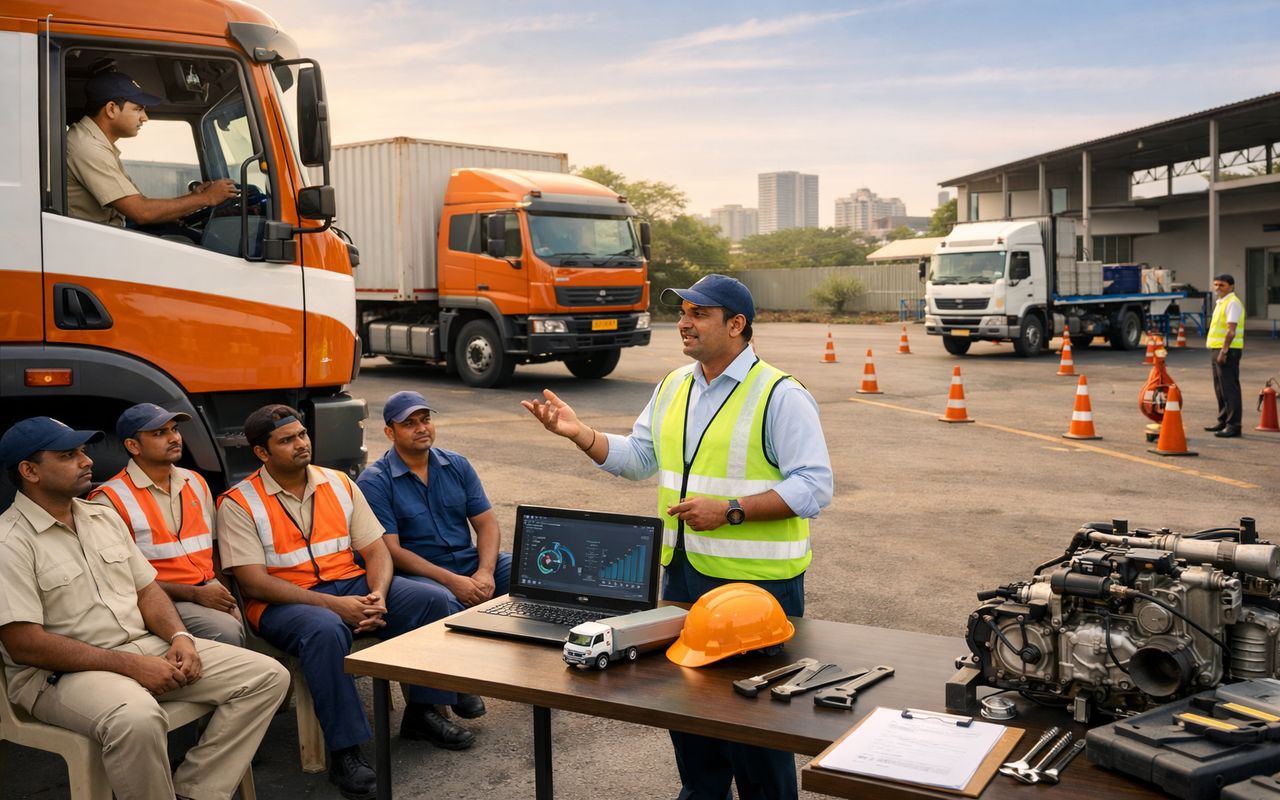
Road freight keeps India moving. From raw materials to finished goods, trucks connect factories, warehouses, ports, and retailers. Yet one accident can undo months of planning. That is why truck driver safety training in India is not just a compliance topic. It is a business priority.
In today’s supply chains, road safety is a key performance indicator. Companies that treat it seriously protect their people, cargo, and brand.
Why Road Safety Is a Supply Chain KPI
When a truck meets with an accident, the impact goes far beyond vehicle repair.
- Cost of delays
If a shipment misses a delivery window, production can stop. A factory waiting for components does not care why the truck is late. It only sees downtime and loss. - Cargo loss and damage
A rollover or harsh braking incident can damage goods. For industries like FMCG, pharma, or electronics, damaged cargo means rejected stock and wasted money. - Reputational risk
B2B customers expect reliability. Frequent incidents create doubt about a logistics partner’s discipline and professionalism. In competitive sectors, reputation is currency.
Think of safety like preventive health care. You invest in check-ups so you avoid bigger problems later. In logistics, structured driver training works the same way. It reduces risk before it turns into loss.
What Good Training Looks Like in Practice
Not all training delivers results. A one-time classroom session does not change habits built over years. Good training follows a simple structure.
1. Strong Induction Program
Every new driver should go through a structured induction before hitting the road. This includes:
- Company safety standards
- Defensive driving basics
- Fatigue awareness
- Vehicle familiarisation
- Reporting protocols
This sets expectations from day one. It signals that safety is not optional.
2. Regular Refresher Training
Driving habits slip over time. Refresher sessions every six or twelve months reinforce good practices. These sessions should include real examples from the company’s own operations.
For instance, if telematics data shows repeated overspeeding on a specific highway stretch, trainers can discuss that case and suggest safer alternatives. Real stories make lessons stick.
3. Behavioural Coaching
Many accidents happen because of attitude, not skill. Impatience, overconfidence, or stress can lead to risky decisions.
Coaching helps drivers reflect on their behaviour. Supervisors can review driving data and sit down one-on-one with drivers. Instead of blaming, they can ask simple questions:
- What was happening when this harsh braking event occurred?
- Were you under delivery pressure?
- How can we plan better next time?
This builds trust and accountability.
4. Defensive Driving Routines
Defensive driving means staying alert and anticipating risk. Practical routines include:
- Maintaining safe following distance
- Scanning mirrors every few seconds
- Slowing down at intersections even if signals are green
- Avoiding sudden lane changes
These habits reduce reaction time and prevent collisions. Trainers should use simulations and on-road assessments to reinforce these routines.
Key Themes for a Modern Training Curriculum
Government guidelines increasingly emphasise structured training for commercial drivers. A strong internal academy should align with these themes.
Stress Management
Long hours, traffic congestion, and tight schedules create pressure. Training should teach drivers breathing techniques, rest planning, and how to communicate delays early instead of rushing.
Fatigue Reduction
Fatigue causes slower reaction times. Companies must educate drivers about sleep cycles, hydration, and mandatory rest breaks. Scheduling should support safe driving, not push unrealistic timelines.
Attitudes and Behaviour
Respect for traffic rules, pedestrians, and fellow road users matters. Training should promote professionalism. A truck driver represents the company on public roads.
Emergency Handling
Drivers should know how to react to brake failure, tyre bursts, or accidents. Quick thinking can reduce damage and save lives.
Maintenance and Fuel Conservation
Basic vehicle checks before departure reduce breakdowns. Teaching smooth acceleration and steady speeds also improves fuel efficiency. Safe driving often leads to lower fuel costs, which benefits both driver and company.
India’s Push for Institutionalised Training
India is gradually strengthening formal driver training through accredited centres and updated skill frameworks. This move recognises that driving is a skilled profession, not just a job.
Logistics companies should align their internal academies with these standardised approaches. When internal training matches national frameworks, companies create a common language around safety. It also makes it easier to certify drivers and demonstrate compliance to clients.
At PTC Logistics Skill Academy, aligning with structured training models ensures that learning stays consistent across branches and regions.
Building a Measurable Training Program
Training only works if you measure its impact. Companies should track clear metrics.
Incident Rate by Driver Cohort
Compare accident rates among newly inducted drivers versus experienced drivers. This shows whether induction programs work.
Harsh Braking and Overspeed Events
Telematics systems provide data on sudden braking or speeding. A reduction over time signals improved behaviour.
Near-Miss Reporting
Encourage drivers to report near misses without fear. These reports act as early warnings. It is better to learn from a close call than from a serious accident.
Coaching Cadence
Set a fixed schedule for coaching sessions. For example, monthly reviews for high-risk drivers and quarterly reviews for others. Consistency builds a safety culture.
Creating a Culture of Safety
Safety does not depend on rules alone. It depends on mindset. When leadership talks about safety in meetings, rewards safe performance, and supports realistic schedules, drivers feel valued.
In road freight, speed may win a race. But safety wins long-term business.
By investing in truck driver safety training in India, logistics companies protect lives, strengthen client trust, and build a resilient supply chain.