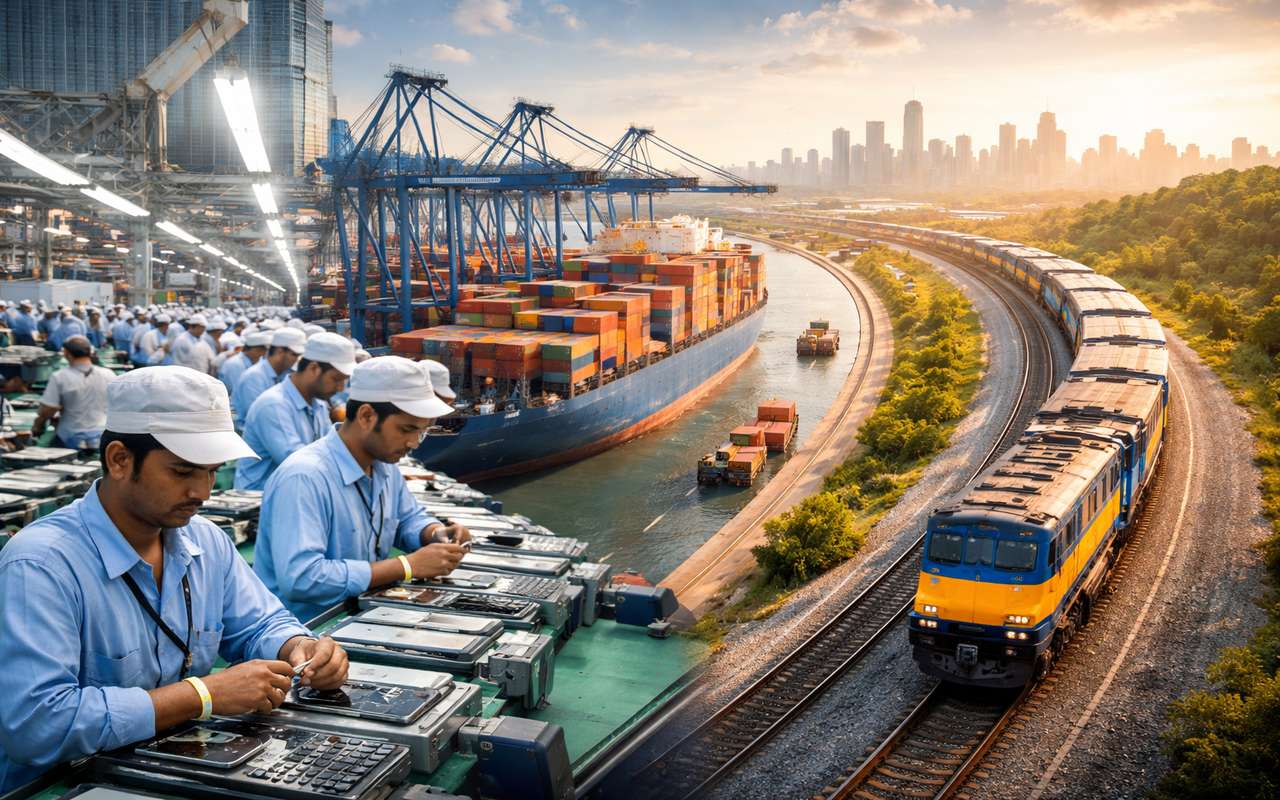
Global supply chains have gone through a reality check in recent years. Trade tensions, pandemic shutdowns, and rising costs exposed the risks of depending too heavily on one country for manufacturing. As a result, many global companies are rethinking where and how they produce goods. This shift has given rise to the China+1 strategy, and India is quickly emerging as the most attractive choice for that “plus one.”
For businesses searching online for India manufacturing China plus one, the story is no longer about future potential. It is about what is already happening on the ground.
Why the China+1 strategy favors India
The idea behind China+1 is simple. Companies keep part of their operations in China but add another country to reduce risk. Think of it like not putting all your savings in one bank. India fits this role well due to its scale, cost structure, and growing domestic market.
Surveys show that more than half of U.S. executives plan to increase sourcing or manufacturing in India over the next five years instead of relying only on China. Global names such as Walmart, Apple, Samsung, and Toyota have already acted on this thinking. They are expanding factories, adding suppliers, or building new production lines across Indian states.
India also offers something China cannot anymore. It combines manufacturing scale with a fast-growing consumer market. Companies can serve Indian customers locally while exporting to the rest of the world.
Electronics manufacturing shows what is possible
Electronics manufacturing best explains India’s rise as a global supply chain hub. For years, East Asia dominated this sector. That picture is changing.
Apple has scaled up iPhone production in India at record speed. In FY 2024–25, the value of iPhones made in India jumped by about 60 percent to nearly ₹1.9 lakh crore. By mid 2025, Apple produced almost 24 million iPhones in India in just six months, far more than the previous year.
This growth pushed India’s smartphone exports to around $21 billion in FY 2024–25, up more than 50 percent year on year. Suppliers like Foxconn played a major role by expanding local assembly and testing operations. The result is clear. India is no longer just assembling products. It is becoming a trusted part of global electronics supply chains.
Government incentives make scale attractive
A strong policy push supports this manufacturing shift. Programs like Make in India and the Production Linked Incentive scheme reduce the cost and risk of setting up factories. These incentives reward companies for producing more in India, much like volume discounts encourage bulk buying.
The goal is ambitious. India aims to raise manufacturing’s share of GDP from about 17 percent to 25 percent. Electronics, automobiles, pharmaceuticals, solar equipment, and batteries all have dedicated incentive programs. Global firms now invest billions in Indian plants because higher output directly unlocks financial benefits.
This approach has changed boardroom conversations. India is no longer seen as a backup option. It is part of long-term manufacturing plans.
Infrastructure and logistics close the gap
Manufacturing only works if goods move smoothly. India has invested heavily to fix this. The PM GatiShakti plan coordinates highways, railways, ports, and airports under one vision. Between 2020 and 2025, the government allocated around $1.4 trillion to infrastructure projects.
Dedicated Freight Corridors in the west and east are close to completion. These rail lines cut travel time from factories to ports, similar to express lanes built only for trucks. Major ports such as Jawaharlal Nehru Port are expanding, and new deep-sea ports are under development.
These upgrades reduce delays and costs, two issues that once held India back compared to China.
Demographics and geopolitics strengthen the case
India’s workforce adds another advantage. With a median age of around 28, India has a large and young labor pool. Many workers speak English and have STEM training, which supports advanced manufacturing and research.
From a geopolitical view, India offers stability and improving ease of doing business. Rising wages and trade restrictions in China make diversification more urgent. Global brands also use India as a base to serve Africa, the Middle East, and Southeast Asia.
Challenges remain. Land acquisition, power reliability, and local supplier depth still need work. Yet the direction is clear.
India’s role in global supply chains is growing
From smartphones and cars to pharmaceuticals and semiconductors, India is moving to the center of global supply chains. The China+1 strategy is no longer a theory. It is playing out in factories, ports, and export data.
For companies exploring India manufacturing China plus one, India now offers scale, policy support, infrastructure, and market access in one package. That combination explains why India is no longer just the plus one. It is becoming a global manufacturing hub in its own right.